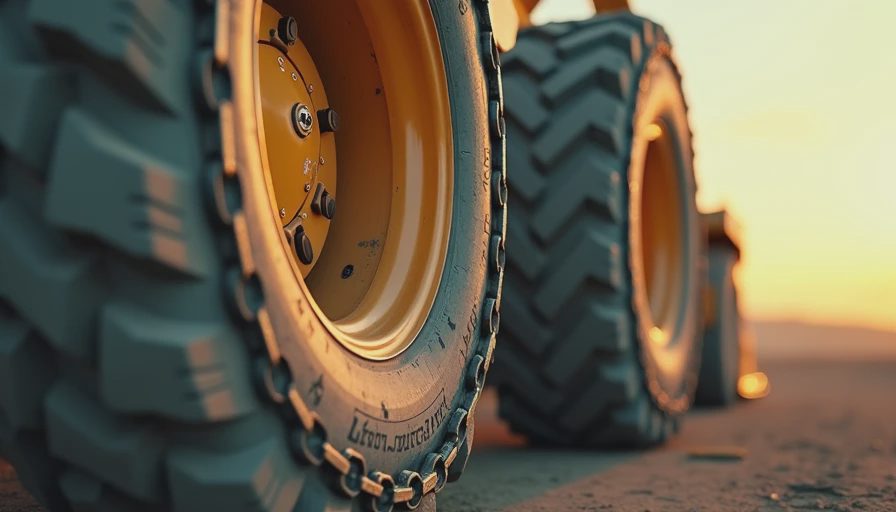
Tire chains for skid steer loaders are not a decorative winter accessory. They are a traction tool for the days when rubber tires spin, flotation disappears, and a $70,000 machine becomes an expensive lawn ornament. I have watched operators burn an hour fighting a muddy access road that a properly chained machine could cross in minutes. The chain itself was not the complicated part. Choosing the right pattern, fitting it tightly, and knowing when to remove it were the parts that separated productive work from damaged tires and broken hardware.
The first question is not which chain looks toughest. It is what surface, tire, and workload the machine will see. Frozen gravel, packed snow, wet clay, demolition rubble, and sharp rock attack chains differently. A contractor clearing snow from parking lots needs predictable steering and a smooth ride. A utility crew climbing a muddy grade needs bite. A demolition operator needs protection against punctures without creating a vibration problem that shakes the loader's attachment and operator.
Match the chain to the job
Tire chains for skid steer loaders generally fall into ladder, diamond, and duo-grip styles. Ladder chains have cross links running mostly straight across the tread. They are often affordable, easy to understand, and effective in straight-line snow work. Their weakness is a more noticeable bump as each cross chain contacts the ground, especially at transport speed.
Diamond-pattern chains place more links across the tread continuously. They provide smoother traction, better lateral control, and more consistent contact while turning. That matters when pushing a snow blade near curbs or working on a side slope. Duo-grip designs add reinforcing links and are better suited to rock, frozen ground, and abrasive construction sites, but they also cost more and can transmit more impact into the tire and axle.
Rubber-tire loaders with a high percentage of road travel do not need the same chain as a machine working ten hours daily in a quarry. For snow removal, a medium-duty alloy chain from brands such as Pewag, Trygg, or Laclede can be a sensible balance. For severe rock work, look at hardened alloy and reinforced side chains. Do not confuse a heavy chain with a correct chain. Excess mass can reduce ride quality, increase tire temperature, and accelerate wear on wheel-end components.

Measure before you buy
Tire chains for skid steer loaders must match the complete tire size, not just the machine model. A Bobcat S650, John Deere 332G, or CAT 262D can be equipped with different tire widths and tread profiles. The number printed on the sidewall, such as 10-16.5 or 12-16.5, is the starting point. Record the tire brand, tread type, and actual clearance around the fender, lift arm, and wheel well.
Measure the tire's outside diameter and tread width if the supplier requests it. Then inspect the machine with the lift arms raised and lowered, because chain clearance can change with suspension movement and tire position. Look behind the tire as well. A chain that clears the front edge can still catch a hydraulic hose, axle housing, or frame bracket at full steering lock.
Ask the supplier for a fit chart and confirm whether the chain is designed for skid steer use. Agricultural tractor chains can have the wrong side-chain length or cross-link spacing. Passenger-vehicle chains are not built for the torque, weight, and abrupt directional changes produced by a skid steer. A $600 chain set that fits correctly is cheaper than a $1,500 tire ruined by a loose cross link.
Installation is where most failures begin
Lay each chain flat before installation and identify the inside and outside fasteners. Remove twists before the chain goes over the tire. If you can use a drive-on installation, place the chain centered on the tread, move the machine a few feet, stop, and connect the remaining section. Never crawl beneath raised lift arms or rely on hydraulic pressure to hold the loader. Lower the attachment, set the parking brake, shut down when working around the wheels, and follow the machine manufacturer's safety procedures.
After the first connection, tension the chain evenly. Most quality sets use cam-style adjusters, tightening chains, or rubber tensioners. Use the supplied system rather than improvising with bungee cords or light tie wire. Drive slowly for several yards, stop on level ground, and retension. New chains commonly settle during the first few minutes. If a cross chain is sagging enough to touch the sidewall, it is not ready for production work.
Tire chains for skid steer loaders should never be installed with a loose side chain simply because the operator is in a hurry. Loose hardware can strike the fender, break a valve stem, or climb over the tread and damage the carcass. The symptom is a rhythmic slap or metallic knock. The root cause is poor tension or a broken link. Stop immediately, find the failure, and repair it before the next pass.
Cost, wear, and operating limits
A basic ladder set may run roughly $250 to $500, while a stronger diamond set commonly lands between $500 and $1,000 per axle. Severe-duty duo-grip or specialty quarry chains can exceed $1,200. Add installation time, spare connectors, and a storage rack to the purchase calculation. In a small operation, one spare repair section is often more valuable than saving $50 on the original set.
Chains are consumable equipment. On abrasive rock, inspect them at every shift change. On snow and frozen soil, an inspection at the end of each day is usually practical. Look for stretched side chains, cracked welds, missing cross links, sharp hooks, and polished spots where the chain is contacting the machine. Rotate or replace heavily worn components before the failure moves into the tire.
Speed matters. Chains are traction devices, not permission to transport at road speed. Follow the chain manufacturer's limit and keep speed low enough that the loader remains stable and controllable. Remove chains when the surface turns to bare pavement unless the product is specifically rated for that use. Dry pavement creates heat and abrasion, and it can make steering harsher than necessary.
A practical buying checklist
Before ordering tire chains for skid steer loaders, write down the following information: tire size, tire brand, tread pattern, loader model, front and rear clearance, primary surface, expected operating hours, and whether the machine travels on public roads. Send photographs of the tire and wheel well to the supplier if fitment is uncertain. A good seller should ask questions instead of guessing from the loader model alone.
Choose the lightest chain that meets the actual duty cycle, not the lightest chain available. A snow contractor may value smooth diamond coverage and quick installation. A grading contractor in wet clay may prefer aggressive cross links. A quarry fleet should prioritize alloy strength, replaceable sections, and local parts availability. Ask how long replacement links take to ship; downtime does not care how impressive the original catalog page looked.
Store clean, dry chains off the ground. Rinse away salt and clay, let them dry, and coat bare steel before summer storage. Mark the set with the machine or tire size so nobody wastes half a shift trying to fit the wrong equipment.
Final field judgment
Tire chains for skid steer loaders earn their keep when they turn lost traction into controlled production. They do not fix a bald tire, a leaking wheel motor, or an operator pushing beyond safe conditions. They give the tread a better mechanical connection to the surface, provided the fit is correct and the chain is tensioned every time.
My buying order is simple: measure first, select for the surface, buy repairable hardware, and test-fit before the storm or excavation starts. If the loader works mostly on snow, prioritize coverage and steering control. If it works around sharp rock, spend more on alloy strength and inspect more often. The iron doesn't lie: a chain that stays centered, quiet, and tight is doing its job. One that slaps the fender is already sending the invoice.
Hours logged: field fitment and inspection protocol applied across working loaders. Fluid samples pulled: none. Parts replaced: worn chain links and tension hardware as required. Iron tested. Iron told.

00 Transmissions
No transmissions yet. Yours opens the channel.