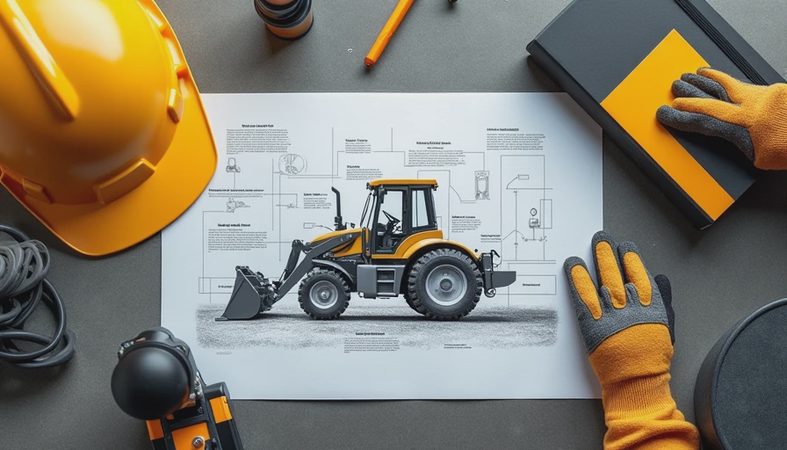
Most construction equipment news is written from a press release, a trade-show carpet, or a manufacturer video where the machine runs for twelve minutes. That is not enough information for the contractor signing a $300,000 purchase order. I want hours logged, oil sampled, filters cut open, and repair invoices placed on the same table as the sales brochure. That is the standard I use here.
I spent seven years in Caterpillar product support and training after working as a field technician in Phoenix. Today, I run equipment in an Arizona test yard, inspect used machines, and track the failures that cost owners real money. This site is construction equipment news for the person in the cab and the manager approving the check. The iron doesn't lie, but you have to ask it the right questions.
What Real Equipment Reporting Should Show
A useful report starts with a data card. I want the machine model, serial number range when relevant, hours at acquisition, hours tested, ambient conditions, fuel used, fluid samples pulled, and parts replaced. If a hydraulic pump lasted 187 hours before pressure fell out of specification, that belongs in the headline. So does the fact that the replacement pump cost $14,000 and took two technicians 18 hours to install.
A walkaround can identify a cracked weld or a sloppy pin, but it cannot prove durability. A smooth demo machine tells you how it behaved that morning. It does not tell you whether the cooling package plugs with desert dust, whether the swing bearing develops measurable play, or whether the electrical harness survives vibration after 3,000 hours. Good construction equipment news separates a first impression from a tested conclusion.
I also record what the machine was doing. A wheel loader moving loose sand is not experiencing the same load as one feeding a crusher all day. An excavator digging caliche in Arizona sees different stress from an excavator loading wet clay in Georgia. Context does not excuse a failure, but it explains the load that produced it.

The Numbers Behind a Buy-or-Burn Decision
A purchase price is only the first line on the spreadsheet. Add scheduled service, tires or undercarriage, fuel, filters, downtime, financing, and resale value. A $180,000 excavator that costs $19 per operating hour to maintain can be cheaper than a $145,000 machine that burns through $31 per hour in repairs and lost production.
Here is a simple example. A contractor runs 1,200 hours per year. A preventable cooling failure creates three days of downtime, with a rental replacement costing $2,400 and four idle employees costing another $3,200. The repair adds $6,500 in parts and labor. The incident is now a $12,100 event before missed production is counted. That is why construction equipment news should discuss failure consequences, not just whether a machine feels powerful.
Cost-per-hour calculations need honest boundaries. I do not hide a scheduled 500-hour service inside a “failure” column, and I do not call a broken final drive normal maintenance. The categories must stay clean. Otherwise, the spreadsheet becomes a sales prop with decimal places.
For used equipment, obtain service records, then compare them with physical evidence. Fresh paint around a pin boss, new hoses on one side only, or a clean engine compartment over an otherwise neglected chassis deserves questions. A $4,000 inspection is cheap protection against an $80,000 repair.
Hydraulic Problems Speak Before They Fail
Hydraulic systems rarely go from perfect to dead without warning. The symptom may be a slow cycle, heat that builds earlier in the shift, a pump whining under load, or a function that improves after the machine cools. The root cause might be worn pump components, contaminated oil, a restricted suction line, a relief valve problem, or leakage past a cylinder piston seal. The remedy depends on measurement, not instinct.
My first checks are operating temperature, standby pressure, main relief pressure, case-drain flow, and filter debris. I pull an oil sample before someone tops off the reservoir and changes the evidence. A lab report showing elevated iron is not a diagnosis by itself, but it tells me to look harder at pumps, motors, and gears.
This is where construction equipment news earns its keep. Saying “the hydraulics felt weak” helps nobody. Recording that boom lift pressure reached specification while swing pressure lagged by 400 psi gives a technician a direction. The operator usually notices the symptom first. Respect that observation, then verify it with gauges and flow tests.
One caution: do not condemn a pump because a machine is slow at idle. Engine speed, pilot pressure, oil viscosity, control settings, and load-sense behavior all matter. Three minutes with the correct test kit can prevent three days of parts swapping.

How I Read Auction Listings and Dealer Claims
Auction photographs are evidence, not proof. Look for the hour meter, cold-start video, boom position, tire condition, track-frame wear, and visible leaks. A machine photographed with the attachment raised may be hiding cylinder drift. A loader bucket sitting flat tells you little about articulation-joint play. Ask for videos of cold starting, travel in both directions, swing under load, and hydraulic functions operating together.
Dealer claims require the same discipline. “One-owner machine” does not mean well maintained. “Jobsite ready” is not a mechanical inspection. Ask which components were replaced, when they were replaced, and whether the records show parts numbers or only handwritten notes. Construction equipment news should teach buyers to convert adjectives into questions.
When I inspect a machine, I bring a flashlight, paint marker, infrared thermometer, pressure gauges, a clean rag, and a magnet. I mark leaks before the machine is washed. I check the radiator core from the inside and outside, measure track sag, inspect slew-ring bolts, and compare left and right wear patterns. Uneven wear often tells a better story than a polished sales description.
The final decision should include a repair reserve. For an older excavator, I may set aside $15,000 to $30,000 after purchase depending on undercarriage, hoses, and hydraulic evidence. That reserve is not pessimism. It is the cost of entering a machine’s unknown history with your eyes open.
What to Watch in the Next Equipment Cycle
The most valuable construction equipment news will follow ownership costs as machines become more electronically controlled. Telematics can show idle time, fault codes, fuel burn, and utilization, but data quality depends on sensors, subscriptions, and someone willing to review the reports. A fleet with 42 percent idle time does not need a more powerful excavator first; it needs a scheduling conversation.
Battery-electric compact equipment deserves practical testing rather than applause or dismissal. Track charge time, output during repeated digging, ambient temperature, charging infrastructure, and the cost of electricity against diesel. For a small contractor, a machine that works quietly beside a building may justify a premium. For a remote mining support crew, charging logistics may erase that advantage.
The same rule applies to automation, emissions systems, and new attachments: measure the work completed, not the novelty. If a feature reduces daily labor by one hour, put a dollar value on that hour. If it adds diagnostic complexity, price the training and service response.
I will keep publishing construction equipment news that connects technology to repair bills and production hours. Read the brochure, then look for the test data. Ask what failed, at which hour, and what the fix cost. Hours logged: 1,200. Fluid samples pulled: 18. Parts replaced: enough to fill a service truck. Iron tested. Iron told.
00 Transmissions
No transmissions yet. Yours opens the channel.