
A trench wall can fail without warning, and a cubic yard of soil can weigh thousands of pounds. Trench boxes give workers a protected space if the shield is rated for the excavation, installed correctly, and used as part of a complete safety plan. Start with the planned depth, soil conditions, pipe size, and lifting equipment. Then match the box and its manufacturer’s tabulated data to the job. A box that fits the trench but exceeds its rating is not a bargain.
What a trench box does
A trench box, also called a trench shield, is designed to protect workers inside it if soil caves in. It does not prevent the trench walls from collapsing. That distinction matters when planning how workers enter, where they stand, and how the shield moves as the pipe crew advances.
Trench boxes typically use two side panels connected by spreaders. The assembly creates a protected working space between the panels, but an open end can still expose workers to a cave-in or material entering the shield. The competent person must assess those exposures and arrange protection for the actual excavation.
Shoring works differently: it supports the excavation walls to help prevent movement. Sloping and benching cut the walls back at appropriate angles or steps. The right system depends on available space, soil, nearby structures, utilities, water, and the depth of the cut. A shield is one tool, not a substitute for evaluating the whole excavation.
Read the rating before the rental agreement
For trench boxes, the governing paperwork matters more than the paint. Ask the supplier for the manufacturer’s tabulated data and the identification information for the exact panels and spreaders being delivered. Confirm that the intended configuration is covered, including the allowable depth for the applicable soil and loading conditions. Don’t assume every combination of panels, extensions, and spreaders carries the same capacity.
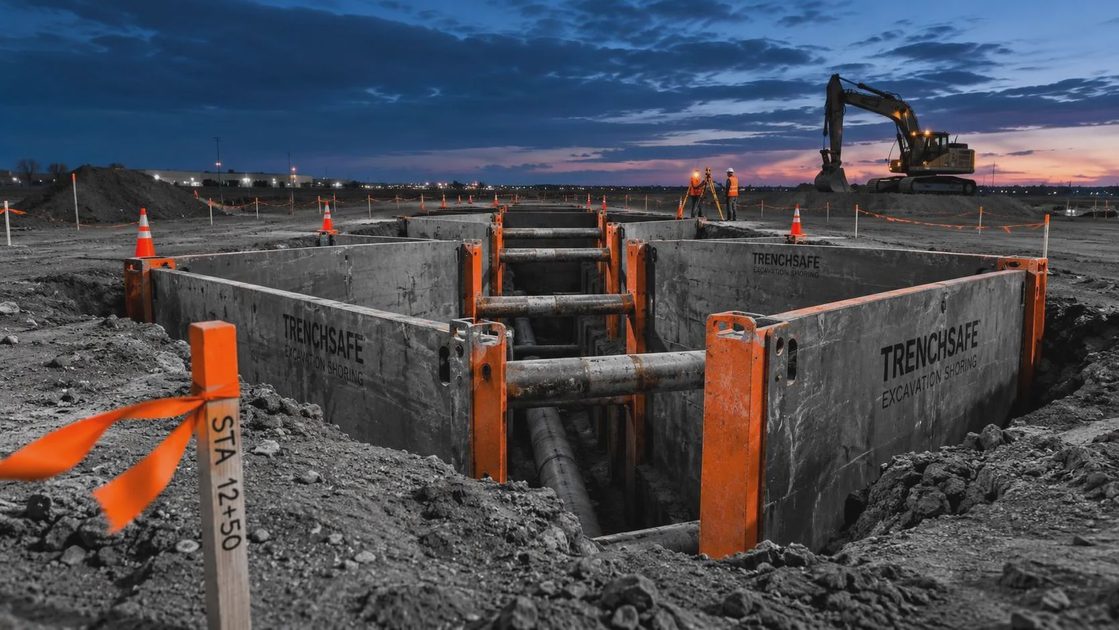
Measure the working room needed for the pipe, bedding, joint assembly, and crew. Then check the outside width against the trench and the shield’s height against the planned cut. A taller stack may require a specific connection arrangement. Mixing components or modifying a shield without proper authorization can invalidate the design and create a weak point exactly where the crew is relying on it.
The competent person must inspect excavations, adjacent areas, and protective systems daily and as needed throughout the shift. Conditions can change after rain, vibration, water intrusion, or a change in the work. If an inspection identifies a hazard, exposed workers must be removed until precautions are in place.
Match the shield to the excavator
The weight that matters is the complete assembly being lifted: panels, spreaders, pins, lifting gear, and any attached extensions. Compare that load with the excavator’s lifting capacity at the actual working radius and configuration, not just its advertised maximum capacity. Reach, machine position, ground slope, and attachment weight can all affect what the machine can safely handle.
Check the lift points and the manufacturer’s instructions. Use properly rated rigging and inspect it before the lift. Keep workers clear of suspended loads, and never allow anyone under a raised shield. The operator needs a clear signal and a firm, stable position; the person guiding the lift needs an escape route.
There is a difference between placing a shield and dragging it forward. Follow the manufacturer’s instructions for moving it and control the hazards created by the move. Workers must not remain inside a shield while it is being installed, removed, or moved vertically. Don’t improvise a procedure because the next pipe joint is waiting.
Plan access, spoil, and water
For trench excavations 4 feet or deeper, OSHA requires a stairway, ladder, ramp, or other safe means of exit positioned so workers travel no more than 25 feet laterally to reach it. Plan where that access goes before the box arrives. A ladder outside the protected area can force someone to cross exposed ground to reach it; access must be arranged so the route itself is protected.
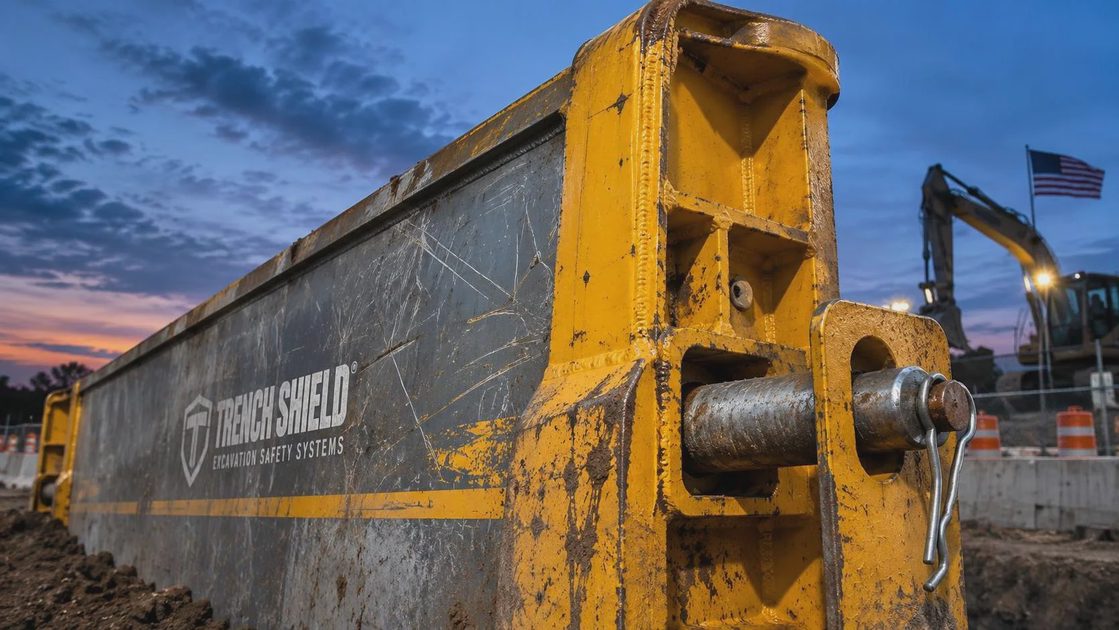
Keep excavated material, equipment, and other objects at least 2 feet back from the edge, or use retaining devices or other means that prevent them from falling or rolling into the excavation. The setback is not a license to park a loaded machine beside any trench: surface loads can affect stability and the selected protective system’s design.
Water changes the job. Workers generally must not work in excavations where water is accumulating unless adequate precautions protect them. Those precautions can include a suitable water removal system with monitoring, or other protection appropriate to the conditions. Pumping alone does not automatically make wet soil stable; the competent person must reassess the excavation.
When protection is required
OSHA generally requires a protective system for employees in excavations, with exceptions including excavations made entirely in stable rock and excavations less than 5 feet deep where a competent person finds no indication of a potential cave-in. Five feet is not a promise that a shallower cut is safe. Soil type, disturbed ground, water, and nearby loads still matter.
At depths greater than 20 feet, protective systems generally must be designed by a registered professional engineer or based on tabulated data prepared or approved by one. State-plan requirements can also apply, so verify the rules for the location and the work.
For trench boxes, the purchasing decision comes down to documented capacity, workable dimensions, compatible components, and a lift your equipment can make safely. Get the data before the delivery truck rolls, and involve the competent person in the selection. The iron doesn’t lie, but it cannot tell you whether the ground beside it has changed.

00 Transmissions
No transmissions yet. Yours opens the channel.