If you are researching how much do excavator operators make, ignore the glossy recruiting promises and start with the conditions behind the paycheck. A compact excavator operator on residential utility work does not earn the same money as a highly experienced operator running a 100,000-pound mining excavator on a night shift. Location, machine size, union coverage, overtime, and responsibility all move the number.
The short answer is broad: many US excavator operators earn roughly $20 to $35 per hour, while experienced operators in heavy civil, mining, energy, or union work can reach $40 to $55 per hour or more. Annual pay commonly lands between $45,000 and $75,000 before overtime, with specialized operators sometimes pushing well beyond $90,000. Those are useful ranges, not promises. The iron does not care what a job advertisement says; the production rate and the operator's judgment eventually show up in the numbers.
The real pay ranges by experience
An entry-level operator or laborer moving into the cab may start around $18 to $24 per hour. At that stage, the employer is paying for basic control, safe spotting, daily inspections, and the ability to avoid damaging a machine or underground utility. A new operator often works under direct supervision and handles grading, trenching, loading, or backfilling on smaller jobs.
After two to five years, pay commonly moves into the $25 to $35 hourly range. This is where an operator can work productively without someone standing behind the seat. The valuable skill is not simply moving dirt. It is placing the bucket accurately, protecting the trench, managing spoil, and keeping a cycle consistent without abusing the hydraulics or undercarriage.
For experienced operators, how much do excavator operators make depends heavily on the type of work. A dependable operator running a large machine, reading plans, directing ground crews, and handling difficult ground conditions may earn $35 to $50 per hour. Supervisory duties, specialized attachments, and a clean safety record can push the rate higher. Annual earnings also change quickly when a regular $32 hourly rate is paired with 10 to 20 hours of overtime each week during a busy season.
Where the higher-paying work is found
Residential construction is often the easiest entry point, but it is not always the strongest-paying lane. Small excavation companies may offer $22 to $32 per hour, sometimes with a company truck, health coverage, or a fuel allowance. Those benefits matter, but compare the full package rather than staring at the hourly figure.
Heavy highway and commercial site work can pay more because the machines are larger, production targets are tighter, and mistakes are expensive. Operators may run Caterpillar 336, Komatsu PC360, or Deere 350-class excavators while working around haul trucks, cranes, concrete crews, and active traffic control. In that environment, a two-minute cycle improvement repeated hundreds of times is real money.
Mining, quarry, pipeline, and large utility projects can produce some of the strongest pay. Remote work, rotating shifts, winter exposure, travel, and long stretches away from home are the trade-off. Union contracts may establish hourly wages, overtime rules, pension contributions, and health benefits that make total compensation substantially higher than a nonunion offer. Rates vary by local agreement, so read the wage sheet instead of relying on a recruiter’s verbal estimate.

What actually increases an operator's paycheck
The fastest way to raise earnings is to become useful on more than one machine. Excavator operators who can also run a dozer, wheel loader, motor grader, or articulated truck give a contractor scheduling flexibility. A company may keep a versatile operator working through a slow excavator week rather than sending that person home.
Attachment skill is another separator. Hydraulic thumbs, breakers, augers, compactors, shears, tilt buckets, and specialized trenching tools each require different control habits. A breaker operator who understands impact settings and hydraulic heat is worth more than someone who simply holds the pedal down until a hose fails. I have seen avoidable attachment abuse turn a profitable shift into a several-thousand-dollar repair.
Grade control experience also carries value. Operators familiar with GPS machine control, laser receivers, digital plans, and automatic grade systems can work with less rechecking from the survey crew. That does not eliminate the need to understand slope, drainage, and soil behavior. It makes a skilled operator faster and more consistent.
When someone asks how much do excavator operators make, certifications are usually part of the answer, but they are not magic tickets. Commercial driver's license qualifications, OSHA training, confined-space awareness, rigging knowledge, and first aid can help. Employers still want proof that the operator can perform a prestart inspection, identify a leaking swing motor, and shut down before a minor symptom becomes a failed pump.
Employee pay versus owner-operator income
An employee has a clearer paycheck. The contractor generally covers machine payments, repairs, insurance, fuel, and downtime. A self-employed operator or small excavation owner can invoice $100 to $200 per machine hour for certain work, but that is revenue, not personal income. A diesel excavator can burn substantial fuel in a day, and a single final-drive, hydraulic-pump, or undercarriage repair can consume months of margin.
Suppose an owner bills 1,200 hours at $145 per hour. That creates $174,000 in gross revenue before fuel, transport, maintenance, loan payments, taxes, insurance, and idle time. If operating costs consume $75 to $95 per hour, the remaining business income is much smaller than the invoice suggests. The owner also carries the risk when weather, permitting, breakdowns, or a customer’s delayed payment stops production.
That is why how much do excavator operators make should be separated from how much an excavation business bills. A strong operator may earn $70,000 as an employee with benefits and predictable hours. An owner may gross far more while taking home less during a repair-heavy year. The ledger tells the truth.

A practical way to compare two job offers
Start with guaranteed hourly wages, then calculate likely annual hours. A $30-per-hour job with 2,000 paid hours equals $60,000 before overtime. Add 300 overtime hours at time-and-a-half and the wage total rises by another $13,500. A $34-per-hour job with only 1,600 paid hours may produce less cash, especially if winter layoffs are common.
Next, price the benefits. Employer health insurance, retirement matching, paid holidays, per diem, travel pay, tool allowances, and a pension contribution can represent thousands of dollars each year. Ask whether travel time is paid, whether rain days are paid, and whether overtime starts after eight hours or after 40 hours in a week. Those details change the real rate.
Finally, inspect the machine fleet and worksite expectations. A clean, maintained Volvo, Hitachi, Komatsu, or Caterpillar excavator is easier to operate productively than a worn machine with weak hydraulics and a loose boom. Ask who handles daily greasing, what the preventive-maintenance schedule looks like, and whether operators are blamed for failures caused by neglected service. A good employer wants production without burning up equipment.
The bottom line for aspiring operators
So, how much do excavator operators make? Plan on approximately $40,000 to $55,000 while building experience, $55,000 to $75,000 as a competent production operator, and $75,000 to $100,000 or more in specialized, union, remote, or overtime-heavy work. The upper end usually comes with harder conditions, larger machines, more responsibility, or more time away from home.
The best career move is to log real seat time while learning the machine's systems. Know what normal hydraulic temperature feels like, understand daily fluid checks, and learn to hear an unhealthy pump before the gauge confirms it. Show up, protect the machine, read the plans, and leave a clean trench or finish grade behind you. Contractors remember the operator who prevents downtime.
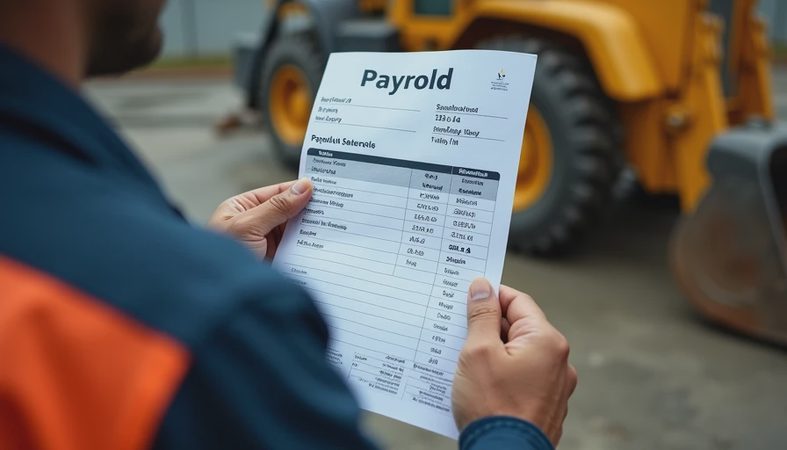
The iron does not lie, and neither does a payroll record. Compare total compensation, not just the headline hourly rate, then choose the path that gives you more productive hours, stronger skills, and a machine worth learning on.


00 Transmissions
No transmissions yet. Yours opens the channel.