A Deere 1010 dozer can look like a bargain parked beside newer machines, but old iron charges interest. The purchase price might be $5,000 to $18,000, while one neglected undercarriage, transmission, or hydraulic repair can consume that entire amount. I have not logged a 100-hour durability test on every surviving machine, so this is not a brochure review or a pretend field report. It is a buyer's inspection guide built around the failure points that decide whether a vintage crawler works for your property or becomes a stationary parts pile.
The machine's age changes the buying process. You are not simply comparing horsepower and blade width. You are measuring support, wear, cold-start behavior, structural condition, and the previous owner's maintenance discipline. The iron doesn't lie, but paint and pressure washing can make it difficult to hear what the iron is saying.
Deere 1010 dozer data card and operating role
The Deere 1010 dozer belongs to an earlier generation of compact crawler tractors designed for farm work, light construction, grading, ditch maintenance, and property clearing. Exact specifications vary by configuration, serial number, blade arrangement, and later modifications, so do not treat an online listing as a factory build sheet. Verify the serial plate, engine identification, transmission type, and blade equipment before pricing the machine.
Expect a relatively small crawler rather than a production-class earthmover. That is its appeal. A sound example can work in tight areas where a larger D4-size machine is wasteful, and transport is simpler with the right trailer. It is useful for spreading fill, maintaining gravel lanes, opening light brush, and cleaning shallow drainage. It is not the machine I would choose for continuous quarry work, deep rock excavation, or pushing wet clay all day.
Budget by condition, not optimism. A running machine with weak steering clutches, worn rails, and a leaking final drive is not a $10,000 machine just because the seller says it runs. It is a core machine with a repair schedule.
Engine, cooling system, and starting behavior
Start the Deere 1010 dozer completely cold. Ask the seller not to warm it before arrival, then put a hand near the exhaust manifold and radiator tank. A warm engine can hide slow cranking, hard starting, smoke, and low oil pressure. Watch the exhaust during startup and under load. Brief haze is not an automatic death sentence on an old diesel, but persistent blue smoke points toward oil consumption, while heavy white smoke after warm-up can indicate poor combustion or coolant trouble.
Check crankcase blow-by with the breather open. A little vapor is normal on an older engine; forceful pulsing that lifts an oil cap deserves a compression and injection-system investigation. Look for coolant stains around the water pump, radiator seams, thermostat housing, and hoses. Replacement radiators and diesel injection work can each run from several hundred dollars into the low thousands, depending on availability and whether a specialist rebuilds the components.
Drive it long enough to build temperature. A machine that stays cold may have a stuck thermostat; one that overheats while pushing a moderate pile has a cooling, timing, radiator, or head-gasket problem. The symptom is rising temperature. The root cause is not always the radiator. Clean the fins and verify the fan, belt, shroud, and coolant flow before approving a repair.
Undercarriage is where the purchase price disappears
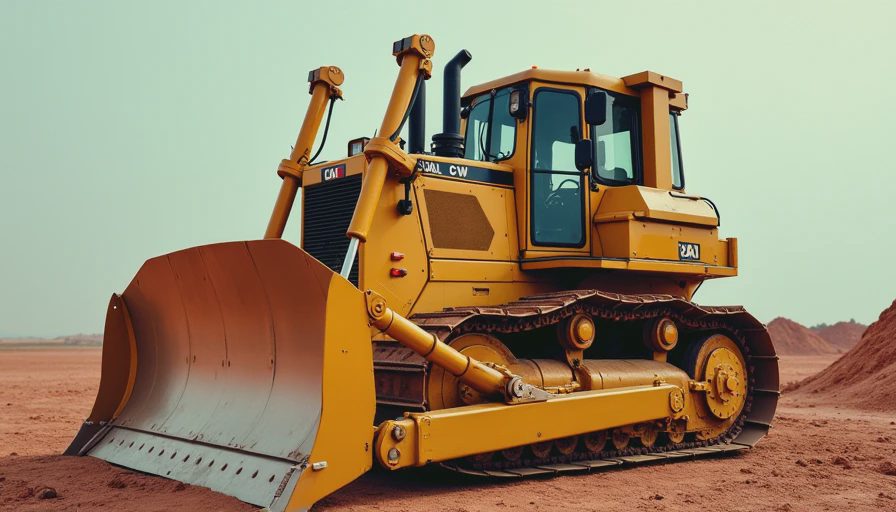
On a Deere 1010 dozer, inspect the undercarriage before admiring the blade. Measure track-chain pitch against the manufacturer's wear guidance when available, and compare both sides for uneven wear. Look closely at rail height, pin and bushing condition, sprocket tooth shape, idler position, roller flange wear, and missing hardware. A track that is visibly loose after adjustment may have stretched components rather than a simple tension problem.
Use a straightedge or wear gauge if you have one. Walking the tracks slowly reveals tight links, noisy rollers, and a machine that pulls to one side. A complete undercarriage can easily cost several thousand dollars, especially when labor, seized hardware, track pressing, and unavailable vintage parts enter the estimate. On a low-priced crawler, that bill can exceed the value of the finished machine.
Check the track frames and mounting points for cracks, crude welds, and elongated bolt holes. Fresh black paint across the frame is not proof of repair quality. Scrape suspicious areas, photograph the welds, and ask what caused the original failure. A professional repair with correct preparation is different from a plate welded over a moving crack.
Steering, transmission, hydraulics, and blade
Test every control at operating temperature. The Deere 1010 dozer should steer predictably in both directions, not require an operator to pull a lever continuously just to make a gradual turn. Steering clutch or brake problems often show up as one side refusing to release, weak turning under load, or a crawler that keeps driving straight despite control input. Repairs can be labor-heavy because access, adjustment, and internal clutch condition matter as much as the replacement parts.
Shift through every available gear without grinding or jumping out. Listen for growling that changes with gear selection, and inspect the transmission and final-drive oil for metallic glitter or water contamination. Milky oil means moisture has entered; silver flakes mean something is wearing. Neither finding should be dismissed as an old-machine characteristic.
Cycle the blade repeatedly. Hydraulic drift, slow lift, jerky movement, and oil appearing around cylinder rods point to different problems. A $100 hose is manageable. A worn pump, scored valve, or damaged cylinder can turn a small repair into a $1,500 to $5,000 project. Inspect the blade push arms, cutting edge, pivot pins, and mounting brackets for bends and weld repairs.
Parts, documentation, and a practical buying plan
Parts support is the central risk with any Deere 1010 dozer. Some service items remain available through agricultural suppliers, equipment specialists, salvage yards, and online marketplaces. Vintage-specific transmission, steering, hydraulic, and undercarriage components can take more searching. Before making an offer, call two parts sources with the serial number and ask for prices on filters, belts, seals, track components, and one major repair item. If nobody can identify the parts, assume downtime will be measured in weeks rather than days.
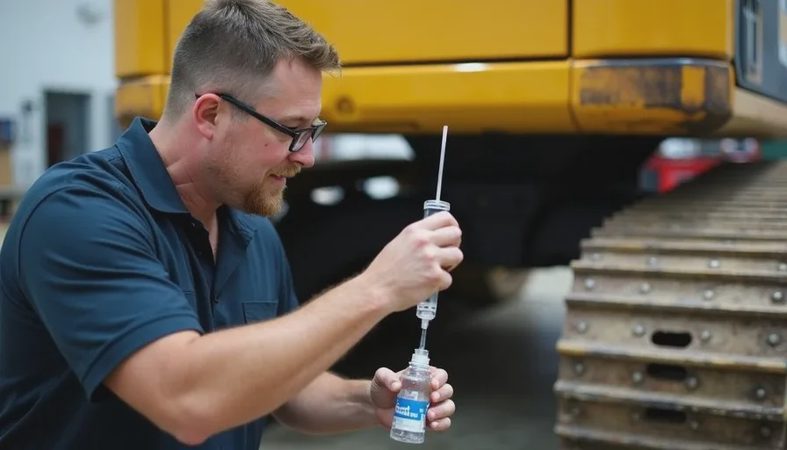
Request maintenance records, but verify them against the machine. An invoice for an engine rebuild should show a shop, date, parts, and work performed. Grease on every pivot tells you someone serviced it recently; it does not prove the engine oil was changed on schedule. Inspect fluid levels before the test drive, then pull samples if the purchase is serious. Engine, hydraulic, transmission, and final-drive samples cost far less than guessing after delivery.
Build the offer in layers. First, price a running machine with unknown internals. Second, subtract confirmed defects such as missing gauges, weak hydraulics, damaged tracks, or bad lights. Third, reserve a contingency fund of at least $2,000 to $5,000 for age-related surprises. If the crawler is intended for paid production, add transport, insurance, attachments, and lost revenue during repair. For private acreage, the same defects may be acceptable if the machine can be parked safely and repaired over winter.
Final judgment before you buy
Buy the Deere 1010 dozer when the engine starts cold, the cooling system holds temperature, steering works in both directions, the transmission stays in gear, hydraulics lift without major leaks, and the undercarriage has measurable life remaining. Cosmetic fading, torn seats, missing gauges, and nonworking lights are negotiation points. Cracked frames, contaminated final-drive oil, severe track wear, and an engine that overheats under load are exit signs unless the price reflects a parts-machine project.
My inspection sequence is simple: verify the serial number, start cold, operate hot, inspect fluids, measure the tracks, examine welds, and price the next likely repair before signing. Bring a flashlight, infrared thermometer, clean rag, magnet, pry bar, and a notebook. Do not let a seller rush the test because another buyer is supposedly waiting. A sound machine will still be sound after a disciplined inspection.
The right vintage crawler can earn its keep on a small farm or contractor's yard. The wrong one can turn a cheap purchase into an expensive education. Hours logged on this specific inspection: not claimed. Fluid samples pulled: take your own. Parts replaced: none until the evidence says so. Iron tested honestly. Iron told.
00 Transmissions
No transmissions yet. Yours opens the channel.