A mini wheel loader earns its keep in tight spaces where a skid steer feels too harsh and a full-size loader is simply too much machine. The right mini wheel loader can load trucks, move pallets, clear snow, handle aggregate, and feed a screening plant without tearing up a finished surface. The wrong one becomes a $45,000 lawn ornament with a hydraulic leak.
I have inspected enough compact loaders to know that the brochure is the least useful place to start. Look at lift performance, axle design, cooling capacity, service access, and the cost of keeping the machine running. A low purchase price does not matter if one proprietary joystick or hydraulic pump removes the machine from your fleet for three weeks.
What a Mini Wheel Loader Actually Does Well
A mini wheel loader is built around visibility, mobility, and quick attachment changes. Unlike many skid steers, it uses a conventional articulated or rigid-frame layout, which usually gives the operator a smoother ride and less ground disturbance. That matters when the machine works around curbs, pavers, utility trenches, or completed landscaping.
The sweet spot is material handling. A bucket can move topsoil, gravel, mulch, and snow quickly, while pallet forks turn the machine into a compact yard forklift. Models from Wacker Neuson, Kubota, Bobcat, JCB, and Avant cover different corners of the market. Some emphasize low height and maneuverability; others offer more breakout force and a heavier operating weight.
Expect a useful operating range of roughly 4,000 to 12,000 pounds, depending on configuration. Rated operating capacity may fall between 1,000 and 4,000 pounds, but that number needs context. The hinge-pin height, bucket position, attachment weight, and ground condition all change what the machine can safely carry. A bucket full of wet sand is a different load from a bucket of dry mulch.

Start With the Hydraulic System
Hydraulics are where a mini wheel loader either becomes a production tool or exposes its weak design. I want to know the standard flow, optional high-flow availability, relief pressure, auxiliary circuit control, and whether the system uses load-sensing technology. The attachment list should drive the decision. A bucket and forks need less hydraulic demand than a sweeper, auger, trencher, or snowblower.
Here is the symptom: the attachment slows dramatically once the hydraulic oil reaches operating temperature. Here is the likely root cause: worn pump components, an internal valve leak, restricted suction flow, or oil contaminated with fine debris. Here is what to do about it: record cycle times cold and hot, pull an oil sample, and check pressure under a controlled load before buying.
A basic hydraulic repair can cost $1,500 to $4,000. A failed variable-displacement pump, contaminated valve block, or damaged hydrostatic drive can push the bill beyond $10,000. Ask for service records showing the correct oil and filter intervals. Fresh paint around fittings is not maintenance evidence.
Inspect the Drivetrain, Axles, and Articulation
Most buyers focus on the engine because it is familiar. I spend equal time underneath the machine. Check the differential housings for wet seals, inspect planetary hubs for heat discoloration, and look for metal around magnetic drain plugs. On an articulated loader, move the frame slowly through its full steering range and listen for clunks from the center joint.
The articulation joint carries steering loads, braking forces, and constant shock from uneven ground. Excessive play can mean worn pins, bushings, bearings, or a damaged joint housing. Repairs commonly land between $2,000 and $7,000, depending on access and parts availability. If the loader has a center-mounted hydraulic cylinder, inspect both rod ends for looseness and scoring.
Tires tell their own story. Matching tread and diameter matter on four-wheel-drive machines because mismatched tires can stress driveline components. Industrial tires usually last longer on pavement, while traction or flotation patterns work better in loose material. A set of four tires can cost $1,200 to $3,500, so include rubber in the purchase calculation.
Buying New Versus Buying Used
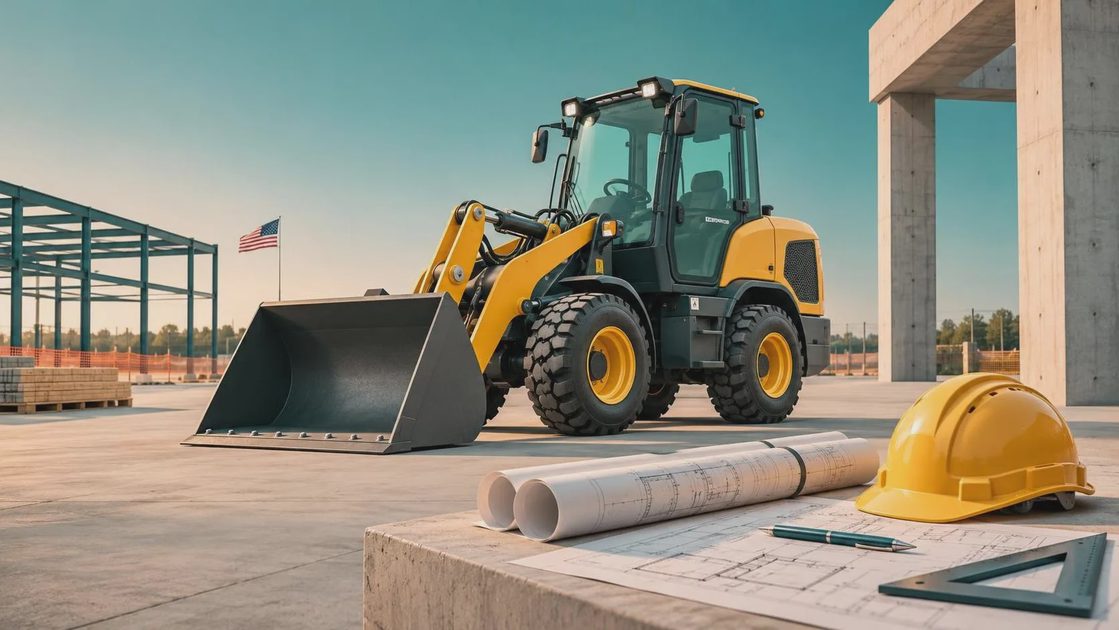
A new mini wheel loader often costs approximately $55,000 to $130,000 before specialized attachments, depending on size, cab options, hydraulics, and dealer support. That price buys warranty coverage and known service history, but it does not guarantee the machine fits the work. A loader with too little lift height will disappoint on truck loading, while an oversized unit burns capital on jobs better handled by a smaller machine.
Used machines can be excellent purchases between 1,500 and 4,000 hours, provided the inspection is disciplined. Auction photos rarely show hydraulic seepage, cold-start smoke, cracked articulation welds, or a transmission that slips after thirty minutes. Run the machine until it is fully warm. Lift a known load, drive both directions, test every auxiliary function, and check for warning codes after shutdown.
For a used mini wheel loader, reserve at least $5,000 to $15,000 for initial repairs unless documentation proves recent work. That reserve covers hoses, tires, filters, pins, batteries, and electrical faults. It does not cover a neglected hydrostatic drive or cracked frame. If the seller will not permit an oil sample or operating test, the discount should be large enough to cover the risk, or you should walk.
Match the Machine to the Attachment Fleet
The best mini wheel loader is not the one with the largest engine. It is the one that runs the attachments you already own without adapters, unsafe ballast, or constant overheating. Confirm coupler compatibility before signing anything. A common quick-attach interface can save hours each week, while a proprietary system can limit you to dealer-supplied tools.
For construction, a general-purpose bucket, pallet forks, and a broom are a sensible starting package. Landscape contractors may value a four-in-one bucket, grapple, and light material bucket. Snow contractors should examine cab heat, defrost performance, tire choice, and hydraulic flow for a blower or blade. Municipal crews often need a machine narrow enough for sidewalks but stable enough to carry pallets of salt or pavers.
Attachment weight affects rated capacity. A 700-pound broom consumes capacity before the first load of dirt enters the bucket. Measure the actual attachment, calculate the remaining payload, and keep the load center in view. Stability is not a feeling from the seat; it is a geometry problem.
Service Access and Ownership Cost
Open the engine compartment before you discuss price. Can you reach the primary fuel filter, hydraulic filters, grease points, battery, and coolant reservoir without removing half the machine? Daily inspection should take minutes, not an afternoon. Poor access encourages skipped maintenance, and skipped maintenance becomes downtime.
Budget routine ownership at roughly $8 to $18 per operating hour for filters, fluids, grease, tires, and ordinary wear, excluding fuel, labor, financing, and major failures. A contractor running 600 hours annually should plan for $4,800 to $10,800 in consumable and wear costs. Add a separate repair reserve, especially after the warranty period ends.
Dealer support can outweigh a modest difference in purchase price. Ask how many technicians can service the model, which parts are stocked locally, and how quickly a hydraulic hose or electronic controller can arrive. A $4,000 cheaper machine is not cheaper if it sits idle during your busiest week.
My Purchase Checklist
Before buying a mini wheel loader, record the serial number and verify ownership, hours, recalls, and service history. Start the engine cold, not after the seller has warmed it up. Check exhaust color, crankcase blow-by, oil pressure warnings, and engine noise. Drive until the hydraulic oil is hot, then repeat the lift and travel tests.
Inspect every cylinder rod, hose fitting, axle seal, tire sidewall, articulation pin, and electrical connector. Pull engine and hydraulic oil samples if the purchase price justifies the laboratory fee. Test the parking brake, work lights, backup alarm, climate controls, coupler lock, and every auxiliary function. A machine that cannot pass its basic controls is not ready for production.
The iron does not lie. It shows up in the oil, the tire wear, the joint movement, and the time required to complete a hot cycle. Buy based on measured condition, service access, attachment fit, and local parts support rather than a polished hood or an impressive hour-meter story.
Hours logged: inspection method matters. Fluid samples pulled: cheap insurance against expensive surprises. Parts replaced: budget for what the previous owner postponed. Iron tested. Iron told.


00 Transmissions
No transmissions yet. Yours opens the channel.