
If you are comparing excavators, wheel loaders, articulated trucks, or other production equipment, x15 off-highway engine specifications are a starting point, not a purchase decision. The Cummins X15 is a large displacement diesel built for demanding industrial duty, but the engine installed in one machine can differ substantially from another through rating, aftertreatment, cooling package, controls, and duty cycle. I have spent enough time around failed iron to know the brochure number is only the first measurement.
The useful question is not simply, “How much horsepower does the X15 make?” It is, “How does this particular calibration deliver power, manage heat, and survive the work my fleet actually performs?” That answer requires the complete engine data plate, installation documentation, maintenance history, and an inspection of the machine around the engine.
Core X15 dimensions and output
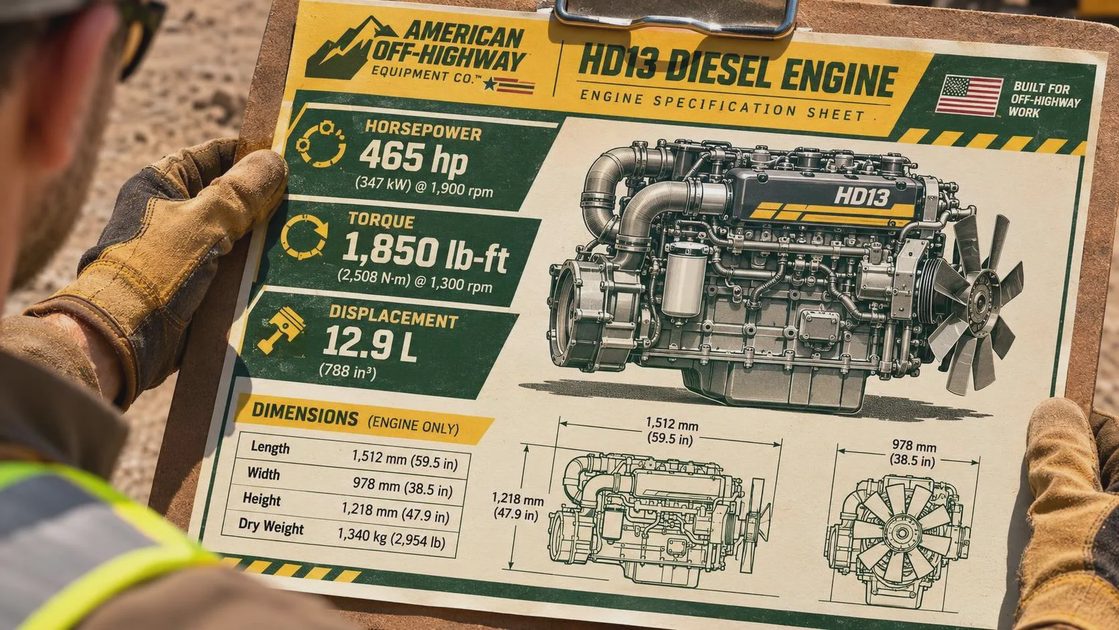
The X15 is a 14.9-liter inline six-cylinder diesel. Commonly published dimensional data includes a bore of about 137 millimeters and a stroke of about 169 millimeters. That long-stroke layout helps produce the low-speed torque heavy equipment needs when a loaded haul truck starts uphill or a loader drives into a dense pile.
Published X15 industrial ratings vary by configuration and application. Depending on the rating family, emissions package, and equipment maker’s calibration, power can land roughly in the mid-400 to mid-600 horsepower range. Some industrial literature lists outputs around 450 to 675 horsepower, or approximately 336 to 503 kilowatts. Those figures are not interchangeable. A 500-horsepower rating with a conservative duty cycle is not the same operating proposition as a 500-horsepower rating expected to pull hard for most of every shift.
Torque is equally important. Ask for peak torque, the engine speed where it occurs, and the torque curve rather than accepting a single peak number. A machine with strong torque below rated speed can hold a gear and avoid constant downshifts. That saves fuel and reduces heat in the transmission, but only if the drivetrain and cooling system were sized for the calibration.
Emissions hardware changes the inspection
Current and recent X15 installations can include exhaust gas recirculation, diesel oxidation catalyst, diesel particulate filter, selective catalytic reduction, and diesel exhaust fluid, depending on model year, market, and emissions tier. Do not assume every engine carrying an X15 badge uses the same arrangement. The serial number and engine control module calibration settle that question.
The aftertreatment system is not decoration hanging off the side of the engine. It affects packaging, exhaust temperature, electrical controls, sensor count, and maintenance cost. A machine that spends its life idling, loading trucks in short cycles, or working at light load may create more regeneration complaints than a machine pulling hard at operating temperature. A plugged DPF, failed temperature sensor, or DEF dosing problem can turn a productive machine into a parked machine quickly.
During an inspection, look for damaged wiring near hot exhaust components, crystallized DEF around dosing hardware, soot marks at clamps, and evidence that someone has bypassed warning lights. Pull fault history with the correct diagnostic tool. A clean dashboard does not prove a clean history; codes can be cleared before an auction.
Cooling capacity matters more than the horsepower sticker
An X15 can make serious power, and serious power becomes waste heat. Radiator condition, fan control, charge-air cooler cleanliness, hydraulic cooler airflow, and the separation between cooling cores determine whether that heat leaves the machine. In desert work, I want to see the stack from both sides. A core can look clean from the fan side while packed with chaff, dust, or oily fines on the opposite face.
Watch coolant temperature under load, not only during a five-minute walkaround. Check for pressure in the cooling system after a hard run, unexplained coolant loss, stained hose connections, and oil residue in the expansion tank. A single temperature event does not automatically condemn the engine, but repeated overheating can damage head gaskets, liners, turbochargers, and aftertreatment components.
Ask whether the machine operates in Phoenix dust, northern cold, high altitude, or wet aggregate. The same base engine needs a different cooling and intake strategy in each environment. An owner who removes access panels for daily cleaning is buying a different risk profile from one who services the radiator once a month.
What the service record should show
X15 off-highway engine specifications tell you what the engine was designed to do; service records show what it actually endured. Look for oil and filter intervals, fuel filter changes, coolant testing, valve adjustment records, emissions-system repairs, and documented regeneration events. Maintenance intervals depend on the installation and oil specification, so use the engine manual and serial-specific schedule rather than copying a highway-truck interval into an excavator.
Oil analysis is one of the cheapest ways to reduce uncertainty before a large purchase. Take a properly labeled sample after the machine has worked, and trend wear metals, soot, oxidation, fuel dilution, and coolant contamination. One sample is a snapshot. Two or three samples establish direction. Rising iron, silicon, or fuel dilution deserves an explanation before the purchase agreement is signed.
Also inspect the air system. A loose intake clamp or damaged dust ejector can feed abrasive material into the turbocharger and cylinders. Check crankcase pressure, blow-by behavior, turbo shaft play, and cold-start smoke. None of these checks is conclusive alone, but several bad signals together are how a six-figure mistake announces itself.
Match the rating to the job
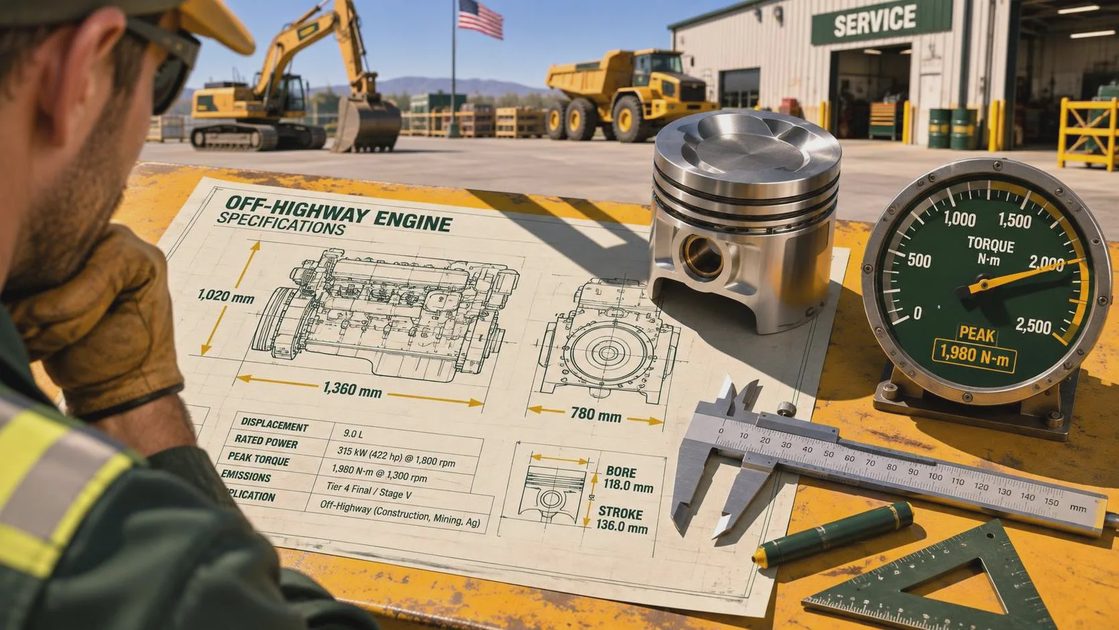
X15 off-highway engine specifications should be matched to the machine’s real duty cycle, not the most impressive line in a sales listing. A wheel loader loading loose material may spend much of its shift in transient work. A rigid haul truck may hold high load for long periods. A generator or pump can operate at a relatively steady speed. Each application stresses fuel, cooling, drivetrain, and aftertreatment differently.
For a used machine, record the engine serial number, rated horsepower, rated speed, peak torque, emissions tier, hours, and application. Then compare those details with the manufacturer’s machine specification, not a generic Cummins brochure. A replacement engine with the same displacement may still require different controls, mounts, sensors, software, and aftertreatment hardware.
Here is the purchasing sequence I use. First, photograph every data plate and obtain the full engine history. Second, confirm the calibration and emissions configuration through a qualified service tool. Third, run the engine at working temperature under representative load. Fourth, pull oil and coolant samples. Fifth, price the ugly parts: turbocharger, injectors, DPF, SCR components, cooling cores, and electronic sensors. If the machine only makes sense when every one of those parts lasts forever, the deal does not make sense.
The numbers that belong on your purchase sheet
Record fuel consumption in gallons per hour during comparable work, not just the seller’s idle reading. Log coolant temperature, oil pressure, boost behavior, regeneration frequency, fault codes, and time spent at full load. Compare those measurements with another machine in the same class when possible. Fuel savings of even one gallon per hour can represent thousands of dollars over a year, while one failed aftertreatment event can erase that advantage in a single repair.
Do not overlook parts availability. Cummins has broad support in North America, but access to a qualified technician, diagnostic software, and application-specific parts varies by location. A contractor in Arizona may have strong local support while a remote mining operation faces freight and downtime costs. Put those costs into the bid before comparing purchase prices.
The iron does not lie, but it does require the right questions. Verify the exact X15 configuration, test it under load, and buy the machine’s complete thermal and emissions package—not merely a displacement number.
Hours logged: inspection standard, not a brochure walkaround. Fluid samples pulled: before commitment. Parts priced: the expensive ones first. Iron tested. Iron told.


00 Transmissions
No transmissions yet. Yours opens the channel.