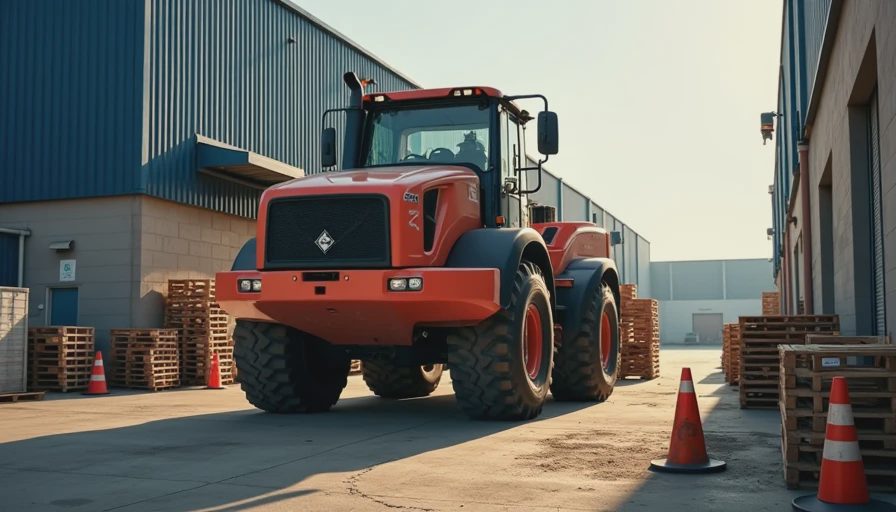
An offroad forklift earns its keep where a warehouse forklift becomes a liability: broken ground, soft fill, steep approaches, and pallet loads that must move before the concrete is poured. I have watched contractors buy on lift capacity alone, then discover that a machine rated for 8,000 pounds cannot travel safely across their actual jobsite. The number on the data plate is only the beginning. Tire construction, hydraulic response, frame articulation, service access, and operator visibility decide whether the machine works or spends your money parked.
This guide is for the contractor comparing a new machine with a used telehandler or rough-terrain forklift. I am not repeating brochure language. I am looking at the failure points that show up after the first hundred hours, when dust gets into everything and the purchase order is no longer refundable.
Start With the Job, Not the Lift Rating
Before looking at brands, write down the heaviest load, its center of gravity, maximum lift height, ground conditions, and travel distance. A masonry crew moving 3,000-pound block bundles on compacted gravel has a different requirement from a framing crew placing roof trusses on a sloped lot. Both may search for an offroad forklift, but one needs traction and stability while the other needs reach, boom control, and accurate placement.
Rated capacity changes with load center and mast height. An 8,000-pound rating commonly assumes a specific load center close to the carriage. Push the load farther forward, raise it higher, or travel across a side slope, and the usable capacity falls. Ask the dealer for a capacity chart that matches the attachment you will actually use. A bale clamp, jib, fork extensions, and truss boom all change the machine's center of gravity.
I also want the machine's operating weight and wheelbase on the same page. More weight can improve traction, but it can also damage freshly prepared subgrade. A compact 6,000-pound unit might fit through a gate that blocks a larger machine, while a 10,000-pound chassis may be the safer choice for repeated work on uneven fill. Specification differences matter only after they are tied to a real load and route.
Tires, Axles, and Stability Tell the Truth
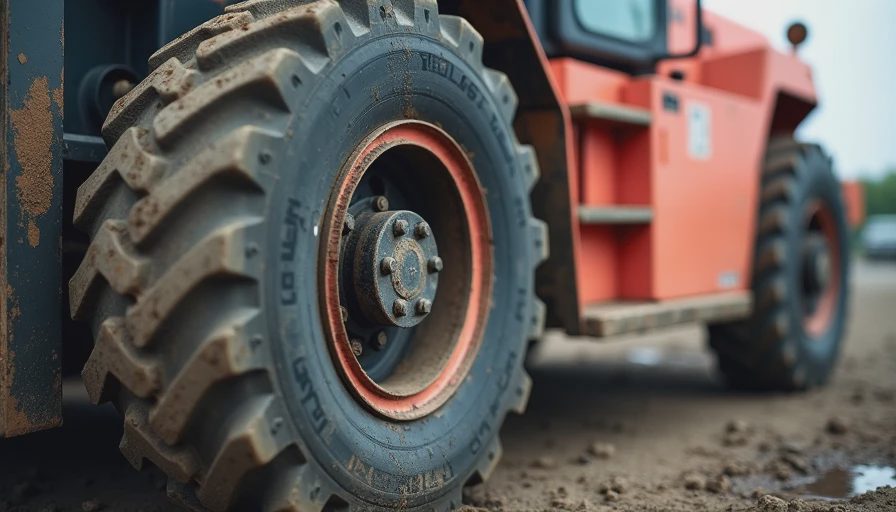
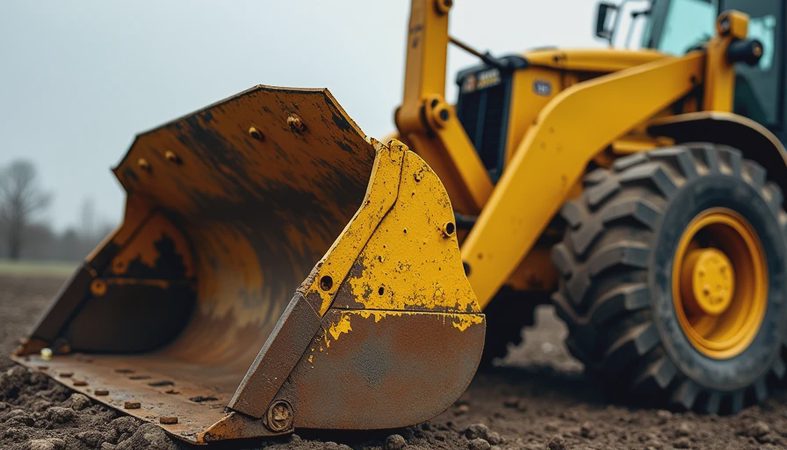
The tires are the first place I look on an offroad forklift. Pneumatic tires provide compliance and better performance over rocks, but they can be punctured by rebar, scrap, and demolition debris. Foam-filled tires reduce puncture risk but add weight, cost, and a harsher ride. Solid tires tolerate abuse, yet they can transmit impact into wheel ends, axle mounts, and the operator's spine.
Inspect the tread for uneven wear, not just remaining depth. Feathering can point to alignment or steering problems. Wear concentrated on one shoulder suggests axle, tire-pressure, or frame-loading issues. On articulated machines, check the center pivot for play and inspect hydraulic hoses around the joint. A small leak there can become a major failure when a hose rubs through during steering.
Four-wheel drive is useful only when the driveline can transmit power without overheating. During an inspection, drive the unit forward and reverse in each range, then turn tightly on firm ground. Listen for clicking, growling, or a delayed engagement. Check axle oil for metallic debris and ask when the differential and hub oils were last changed. A machine can look clean and still have expensive wear hidden behind the planetary hubs.
Hydraulics Are Where Downtime Gets Expensive
An offroad forklift with weak hydraulics is not merely slow. It can become unpredictable when the operator is positioning a suspended load. With the engine warm, raise a representative load, hold it at height, and watch for drift. A small amount of settling can come from internal valve leakage or cylinder bypass. Rapid drift deserves a pressure test before anyone signs a purchase agreement.
Listen to the hydraulic pump at idle and under load. A sharp whine that changes with engine speed can indicate aeration, restricted suction, low oil, or pump wear. Check the reservoir for foam, burnt odor, and contamination. Pulling a fluid sample costs less than an hour of shop labor and can identify abnormal iron, copper, silicon, or water before a pump fails.
The control pattern should be predictable. Lift, tilt, and auxiliary functions should respond without hesitation or a sudden jump. Test every function together if the manufacturer allows it. A machine that lifts correctly with no load can still reveal a weak pump when the boom and attachment are working at the same time.
Used-Machine Inspection: Hours Are Not the Whole Story
Hour meters help, but they are not a maintenance history. A 3,500-hour offroad forklift with documented oil analysis and regular axle service can be a better buy than a 1,800-hour machine that sat outside with water in the electrical connectors. Compare hour-meter readings with pedal wear, seat condition, steering-wheel wear, tire age, and service records. Inconsistent clues deserve questions.
Start the cold machine yourself. A seller should not warm it up before you arrive. Cold starting exposes weak batteries, glow-plug problems on diesel engines, excessive smoke, and slow hydraulic response. Watch the exhaust after warmup. Brief smoke during startup is one thing; persistent blue smoke, heavy black smoke under light load, or white smoke after the engine reaches temperature demands diagnosis.
Look under the frame for fresh paint, weld repairs, bent guards, and oil washed off before the appointment. Inspect the mast or boom welds with a light. Cracks around mounting plates, carriage guides, and lift-cylinder brackets are structural concerns, not cosmetic defects. Verify that the safety interlocks, backup alarm, lights, seat switch, and load chart are present and functional.
New Versus Used: Put the Cost on Paper
New machines often bring warranty coverage, financing programs, cleaner emissions systems, and easier parts support. Depending on capacity and reach, purchase prices can run from roughly $45,000 for a compact rough-terrain unit to well above $150,000 for a high-capacity telehandler with attachments. That premium buys predictability, but not immunity from poor maintenance.
Used equipment can save $20,000 to $70,000 upfront, especially when a contractor buys a standard configuration instead of a specialized boom package. Reserve money for immediate baseline work: all fluids and filters, worn tires, battery replacement, hydraulic testing, and damaged forks. A practical inspection and first-service reserve is often $3,000 to $10,000, depending on condition and parts availability.
Insurance and transport also belong in the purchase calculation. Confirm that your commercial equipment policy covers theft, collision, and transport damage, and ask whether rented or borrowed attachments require separate terms. Hauling a 12,000-pound machine may require a different trailer, permits, and tie-down plan than the invoice suggests.
The Purchase Decision I Would Make
For a contractor, the best offroad forklift is the one matched to the worst normal condition on the site, not the one with the biggest number in an advertisement. Choose enough capacity for the real load center, tires suited to the debris, and a dealer or independent shop that can support the engine, axles, and hydraulic system within a reasonable distance.
Before paying, request the serial number, maintenance records, capacity chart, attachment list, fluid history, and a cold-start demonstration. Pay for an independent inspection if the machine costs more than a few months of operating profit. On a used unit, a $600 to $1,200 inspection can uncover a hydraulic, axle, or structural problem measured in five figures.
The three-sentence diagnostic is simple: here is the symptom, here is the root cause, and here is what to do about it. If the seller will not allow those questions, walk away. The iron does not lie; it leaves evidence in the oil, the tires, the welds, and the repair invoices.
Hours logged: inspection protocol varies by machine. Fluid samples pulled: request them before purchase. Parts replaced: budget for the baseline service. Iron tested. Iron told.
00 Transmissions
No transmissions yet. Yours opens the channel.