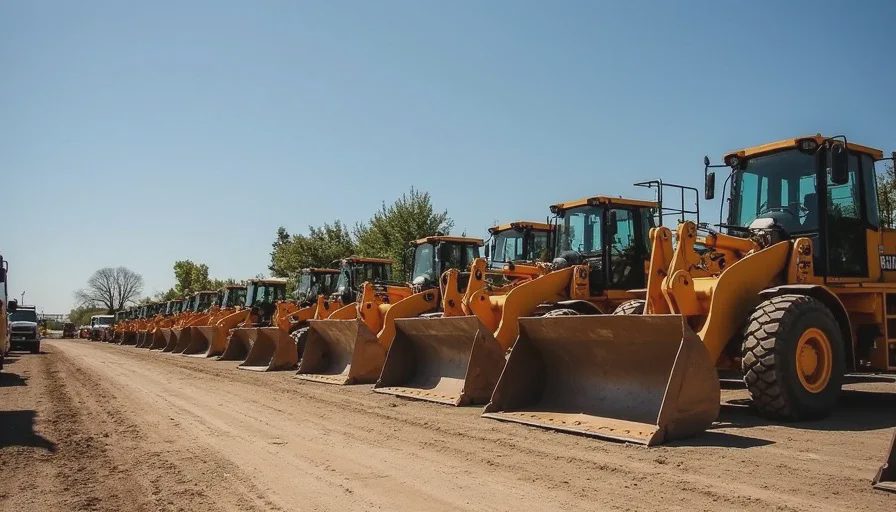
I've been to more equipment auctions than I can count. Ritchie Bros. in Phoenix. local consignment sales in small-town Arizona. dealer blowouts in Texas. I've seen good deals and I've seen disasters. And I've walked away from more machines than I've bought.
Here's the thing about auction machines: none of them are bad machines. They're just bad buys at the wrong price. Every one of these five machines would have done good work for someone. But the price tag, the hidden problems, or the math just didn't work out. I walked away from all of them.
Here's why.
Machine 1: The Low-Hour Excavator
The setup: A CAT 320 with 2,100 hours on the clock. Three years old. Clean paint. Original bucket. The photos looked perfect. The Ritchie Bros. preview day was a 90-minute drive, but I went anyway.
What I found: The paint was original. The bucket was original. The cab was clean. Everything looked right. Then I crawled underneath.
The belly pans were full of hydraulic fluid. Not a drip. A pool. I traced the leak to the main hydraulic pump. The drain plug was weeping. Not a big deal by itself—but the leak had been going on long enough to saturate the sound-deadening material under the cab. That material holds moisture. Moisture causes corrosion. Corrosion in the belly pan eats through wiring harnesses over time.
The number: The auction guide price was $185,000–$210,000. The pump replacement alone would have been $8,000, plus the wiring harness risk. I bid up to $150,000 and stopped.
The outcome: It sold for $197,000. Someone bought a $28,000 repair bill they didn't see.
Why I walked: The pump leak wasn't the problem. The corrosion risk was. When you buy a machine with hidden fluid damage, you're not buying the machine. You're buying the problems it's been hiding.
Machine 2: The "Fresh Rebuild" Dozer
The setup: A Deere 850K dozer with 8,000 hours. The auction listing said "engine rebuilt at 7,500 hours. New undercarriage at 7,800 hours." The photos showed fresh paint on the undercarriage and a clean engine compartment.
What I found: The engine rebuild was real—I checked the paperwork. The undercarriage was not. The tracks were new, but the sprockets were the originals. They'd painted them black to hide the hooking. A new chain on worn sprockets is a mismatch that will eat both in half the time.
I asked the auctioneer for a cold start. He said "the battery is dead." Translation: they didn't want me to see how it started cold. I brought my own jump pack. The engine started—with a loud knock that lasted 15 seconds. That's a cold start issue. It cleared up, but a knock at startup means the rod bearings are worn and the oil pressure is building too slowly.
The number: The auction guide price was $135,000–$155,000. A new undercarriage set (chains, sprockets, rollers) was $18,000. An engine bearing rebuild at 8,000 hours would be $12,000 on top of that. I bid to $110,000 and stopped.
The outcome: It sold for $148,000. Somebody bought a dozer with a $30,000 repair bill already in the tank.
Why I walked: The mismatch between the "new" undercarriage and the worn sprockets told me the seller was hiding things. If they're hiding the undercarriage, what else is hiding?
Machine 3: The Wheel Loader with a "Fresh Paint" Job

The setup: A Komatsu WA500 wheel loader. 4,500 hours. The photos showed fresh paint on the bucket, the cab, and the engine compartment. Looked showroom-new.
What I found: Fresh paint over rust. I tapped the bottom edge of the bucket with a hammer—the paint flaked off to reveal pitting and corrosion. The bucket had been left half-full of material for too long, and moisture had eaten through the steel from the inside.
More concerning: the paint on the frame was hiding a hairline crack at the articulation joint. I spotted it because the paint was slightly darker in that spot—they'd painted over the crack instead of welding it. A crack at the articulation joint is not a weld-and-forget repair. It means the frame is flexing, and the alignment is off. That's a $20,000 frame repair at a minimum.
The number: The auction guide price was $95,000–$115,000. Frame repair was $20,000. A new bucket was $12,000. I bid to $80,000 and stopped.
The outcome: It sold for $102,000. A buyer paid more than the machine was worth without even realizing they'd need to replace the bucket in the first year.
Why I walked: The fresh paint was a warning, not a feature. If someone is painting a used machine before an auction, they're hiding something. Always.
Machine 4: The Articulated Hauler with a "Recent Transmission Service"
The setup: A Volvo A40D articulated hauler. 6,200 hours. The listing said "transmission recently serviced by Volvo dealer." The truck looked clean from a distance.
What I found: The transmission service was real. I called the dealer and verified it. But the service had been done at 6,000 hours—200 hours before the auction. And the invoice showed two things: a new transmission control module and a full fluid flush.
Why did it need a new TCM at 6,000 hours? Because the transmission had been overheated. The TCM fails when internal temperatures exceed 300°F for extended periods. The flush was to remove burned fluid.
The dealer invoice also showed a code for "transmission clutch slippage" that had been cleared but not resolved. I asked the auctioneer to see the machine's diagnostic history. He said "the battery died and the codes cleared." That's not how diagnostics work—a dead battery doesn't clear stored fault codes.
The number: The auction guide price was $160,000–$190,000. Transmission overhaul would be $25,000. I bid to $140,000 and stopped.
The outcome: It sold for $175,000. The buyer got a hauler that was already showing signs of transmission failure—they just didn't know it.
Why I walked: The dealer service was real. The problem they didn't fix was also real. A TCM replacement without addressing the underlying overheating issue is a band-aid. The next repair would have been a complete transmission overhaul.
Machine 5: The Compactor with 0 Hours on the Meter
The setup: A Caterpillar 815F soil compactor. 0 hours on the meter. Looked brand new. It had never been registered—a "demo unit" that had been sitting on a dealer lot for three years.
What I found: Zero hours on the meter, but 300 hours on the engine hours log. This wasn't a "demo unit." It had been used as a rental machine and then returned. The meter had been reset—or the machine had been left running for extended periods.
More concerning: the tires were flat-spotted. That's a sign of a machine that sat in one place for months, maybe years. Flat-spotted tires on a compactor can't be repaired—you replace them. $8,000 per tire, four tires.
I checked the hydraulic fluid—it was cloudy. That means moisture ingress from sitting. The seals in the hydraulic system dry out over time, and moisture gets in through the breather. Every cylinder would need a seal kit at a minimum.
The number: The auction guide price was $225,000–$250,000. Tire replacement was $32,000. Cylinder seals were $8,000. Hydraulic flush and filters were another $3,000. I bid to $200,000 and stopped.
The outcome: It sold for $238,000. A buyer paid top dollar for a machine that would need $45,000 in work before it could do a day's work.
Why I walked: Zero hours on the meter is a red flag, not a selling point. Machines that sit for years are more expensive to bring back to life than machines that were used daily.
What I Learned
These five machines taught me the same lesson: auctions are not about finding the best machine. They're about finding the machine with the fewest hidden problems at the right price.
Every auction has a "winner." The winner is the person who saw the hidden problems and accounted for them. The loser is the person who looked at the paint and the hours and the "recent service" sticker and ignored the rest.
Here's what I do now:
Always preview. If you can't see the machine in person, don't bid. No exceptions.
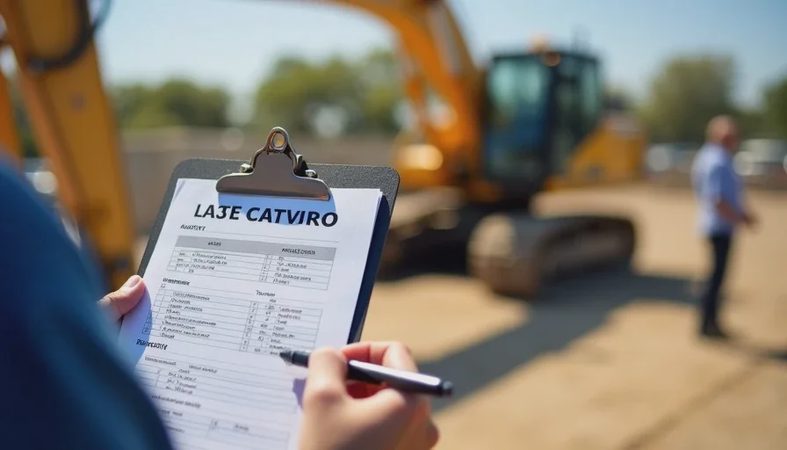
Bring the list. Use the 15-point inspection checklist I wrote. Follow it. Every time.
Check the history. Call the dealer. Verify the service records. Ask about fault codes.
Factor in the worst case. If you think it needs $5,000 in repairs, budget $10,000.
Know your walk-away number. Set it before you bid. Stick to it. No exceptions.
The iron doesn't lie. But the auction listing sometimes does.
00 Transmissions
No transmissions yet. Yours opens the channel.