Construction equipment news today is full of product launches, auction headlines, fuel updates, and manufacturer announcements. The hard part is separating useful information from polished noise. A new excavator can have an impressive brochure and still deliver an expensive surprise at 2,000 hours. A used loader can look rough and still have a healthy powertrain if its fluids, service records, and operating history line up.
I spent seven years teaching dealer technicians how to diagnose hydraulic systems, and I learned one rule that still holds: the iron doesn't lie. It tells the truth through temperature, pressure, wear metals, repair hours, and fuel burned. Here is how I read current industry developments so a contractor or fleet manager can make a decision that survives contact with the jobsite.
Read the headline, then find the operating cost
The first question behind any construction equipment news today headline is simple: does this change what the machine costs to own? Horsepower and lift capacity matter, but they do not pay the invoice by themselves. Look for information about fuel consumption, service intervals, warranty coverage, component life, parts availability, and electronic diagnostics.
Suppose a 30-ton excavator is advertised with a new engine control strategy. That is interesting, but incomplete. I want to know whether the change lowers diesel use during truck loading, reduces hydraulic oil temperature, or simply adds another software menu. If a machine burns 4 gallons per hour instead of 4.5 during a 1,500-hour year, the difference is 750 gallons. At $4 per gallon, that is roughly $3,000 before considering idle time or maintenance.
The same test applies to electric equipment. Battery capacity is only one number. Charging time, cold-weather performance, duty cycle, replacement cost, and site power availability decide whether the machine earns its keep.
What current equipment news should include
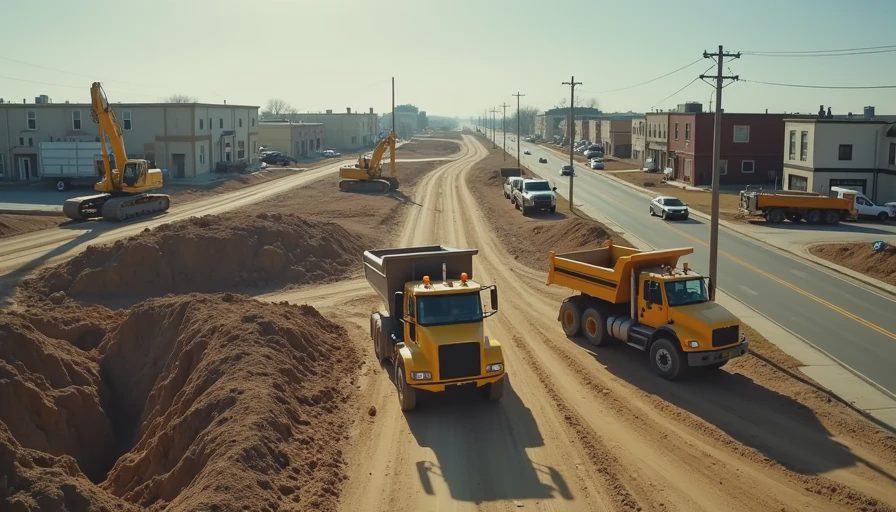
Useful construction equipment news today should give you more than a photograph and a list of standard features. I look for five pieces of evidence.
First, there should be a defined machine class and application. A compact track loader pushing mulch is not comparable to one running a cold planer all day. Second, the report should identify the hours logged or the field period observed. A 30-minute demo proves starting performance, not durability. Third, maintenance details should be visible, including filters, fluids, grease intervals, and fault codes.
Fourth, operating conditions matter. Phoenix heat, northern frost, abrasive mine dust, and wet clay attack different components. Finally, the source should explain what failed or what remains unknown. A review that never mentions a weakness is advertising wearing work boots.
When I test a machine, I record ambient temperature, load type, hydraulic oil temperature, fuel added, and idle percentage. I pull fluid samples at repeatable intervals. That data will not make a dramatic headline, but it can expose a cooling problem long before a warning light appears.
How to verify a new machine claim
Manufacturers build capable equipment, and their engineering teams know more about a new model than I do. Their claims still need context. If a release says a wheel loader has improved productivity, ask how productivity was measured. Was the bucket filled to a consistent payload? Were travel distances identical? Did the comparison include tire pressure, operator experience, and idle time?
For a hydraulic excavator, compare cycle time only after checking the attachment and material. A narrow bucket in loose sand will produce a different number from a hydraulic breaker in fractured rock. For a dozer, blade load, underfoot conditions, and finish-grade requirements can completely change fuel burn.
Construction equipment news today is most useful when it lets you reproduce the comparison. If it does not, treat the claim as a lead for your own test, not as a purchase order.
A practical buyer should request a machine demonstration with a written checklist. Run the unit cold. Listen for crankcase blowby, check hydraulic functions at operating temperature, inspect the undercarriage, and review active and stored diagnostic codes. Then price the first 2,000 hours of filters, fluids, tires or tracks, planned repairs, and downtime.
The used-equipment angle: news meets inspection
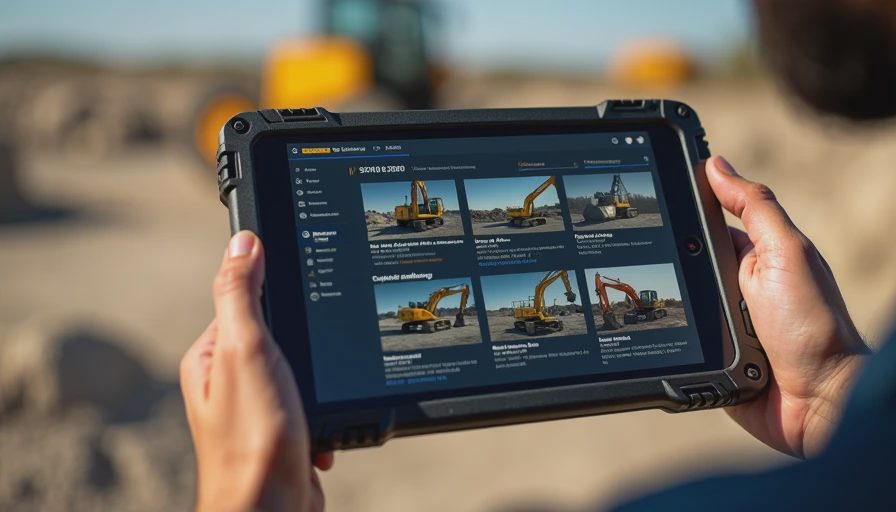
Auction results and dealer listings are useful market signals, but they are not condition reports. A clean-looking 2019 excavator with 4,800 hours can sell for $110,000 and still need a $25,000 swing bearing or hydraulic pump. A scarred machine with 6,000 hours could be the better buy if the owner replaced the final drives, serviced the cooling system, and kept oil analysis records.
Before bidding, ask for serial-number history, service invoices, oil-sample results, and photos of the cylinders, pins, bushings, radiator cores, and undercarriage. Inspect for mismatched paint around major components. Fresh paint is not proof of deception, but paint over oil leaks is a reason to slow down.
I also calculate a repair reserve. On an older loader, setting aside $15,000 to $30,000 for the first year is not pessimistic; it is planning. If the purchase only works when every component performs perfectly, the purchase does not work.
Safety, technology, and serviceability
Technology deserves a place in construction equipment news today when it improves uptime or protects people. Grade-control systems can reduce rework. Payload monitoring can help prevent overloads. Remote telematics can show fault codes, idle time, location, and maintenance intervals. Those benefits are real when the data reaches someone who acts on it.
They also create new questions. Who owns the data? What happens when cellular coverage drops? Can a technician diagnose the machine without a monthly subscription? Is a replacement display available five years from now? A machine that cannot operate because a subscription expired is not efficient equipment.
Safety announcements deserve the same practical treatment. Better visibility, improved steps, guarded access points, and automatic shutdown systems are valuable. The operator still needs training, a daily walkaround, and a clear lockout procedure. Good design reduces risk; it does not replace disciplined work.
My five-minute news filter
When I see construction equipment news today, I run five checks before passing it to a client. I identify the exact model and configuration. I find the duty cycle behind the claim. I look for independent hours or service evidence. I translate the feature into dollars per operating hour. Then I ask what could fail and whether parts, tooling, and trained service support are available nearby.
That process keeps shiny announcements in their proper place. Sometimes the new machine is genuinely better. Sometimes a proven model with a stronger dealer network is the smarter buy. Sometimes the right answer is to repair the machine already in the yard instead of financing another one.
If you are comparing equipment, bring me the serial numbers, intended application, annual hours, and local fuel cost. I can help build a repair reserve and inspection plan before the deposit changes hands. Hours logged: measured. Fluid samples pulled: documented. Parts replaced: priced. Iron tested. Iron told.
00 Transmissions
No transmissions yet. Yours opens the channel.