If you're asking how much do heavy equipment operators make before you pay for CDL school or take a seat in a production dozer, the answer is more than most people expect. But it's less than the overtime-stuffed check stub makes it look. I've spent fifteen years around the people who move dirt, and the pay depends more on where you sit and what you run than almost anything else.
The Straight Retail Numbers
The Bureau of Labor Statistics puts the median annual wage for construction equipment operators around $54,000 to $56,000. That's the middle of the road. Add the overtime — road crews and excavation jobs run 10-hour days and six-day weeks during dirt season — and a $28-an-hour rate becomes a $65,000 or $75,000 year. A crane operator with a tower cert can tell you six figures is realistic, and a guy running an off-highway haul truck in a mine will back that up.
The base rates most job posts advertise sit between $24 and $38 an hour. Double-time after 12 hours is common on federal highway work, and night shift premiums add $2 to $4 an hour. A starting operator has a tough first year; a seasoned excavator hand who loads trucks without spillage is worth the premium.
What Moves the Number
Union scale is the biggest factor. In states with strong IUOE halls, journeyman rates run $38 to $52 an hour on heavy civil work, plus pension and health benefits worth another $10 an hour. Non-union shops run lower, but owners will pay to hold onto reliable operators.
Region matters too. A shovel operator on a copper mine in Arizona out-earns a guy running a compact excavator behind a Home Depot. Remote jobs shower down per diem that makes the hourly rate look like a rounding error.

Machine class is another line on the wage scale. Running a 100-ton haul truck, an 80-ton excavator, or a tower crane is not the same paycheck as finish-grading on a dozer. The guys who invest in the highest class rating consistently land at the top of the scale.
The Real Check: Overtime, Per Diem, and Down Days
Here's what the job posting doesn't explain. A heavy equipment operator's W-2 can look great, but the hourly math only works if the hours actually come. Dirt work is weather-dependent. A $75,000 year is a $40,000 check in a wet year unless you've got travel work or an unemployment cushion.
On the flip side, heavy civil and mining jobs pay per diem. Operators pick up $45 to $75 a day just for showing up and staying in a motel. That adds $1,000 to $1,500 a month, tax-advantaged, on top of the base rate. Travel time is usually bucketed, and union contracts often guarantee 40 hours even when the weather doesn't cooperate.
Owner-operators are a whole other animal. If you own the machine, your pay is whatever's left after fuel, insurance, tires, and the repair bill. The iron doesn't lie: a newer machine on a real job can pay itself off in two seasons, but a neglected unit will eat every hour of profit.
How to Push Your Pay Up the Scale
If you want to move the needle, do three things.
First, get a crane certification or at least a Class A CDL. Operators who can run a hoe and pull a lowboy trailer are gold. Fleet managers say they'd rather overpay a compact operator who can move his own machine than babysit a guy with no way to get home.
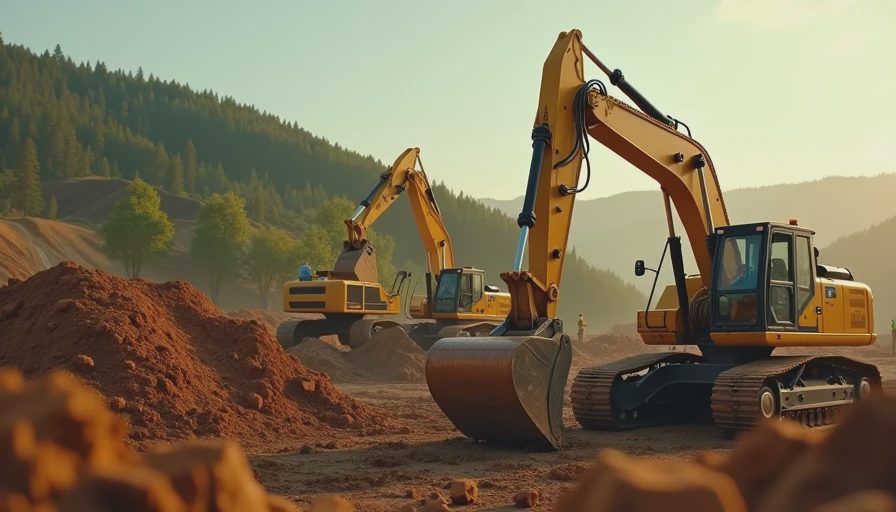
Second, learn grade control electronics. An excavator operator who can set up a Trimble or Topcon system is worth $4 to $7 more an hour than one who needs a grade setter. GPS machine control is the difference between a dozer that passes as-built inspection and one that gets ripped out.
Third, be the operator who shows up. Dependability, a clean drug screen, and a logbook that's actually up to date get you more hours than any skill on the iron.
What About Benefits and the Union Perks?
The wage number is one thing, but the total package keeps operators in the seat. Union operators see a pension contribution, an annuity, and health insurance that follows them. That can be worth another $8 to $12 an hour. Non-union shops may not match that, but many offer 401(k) matches, boot allowances, and paid crane training. A $30-an-hour union job with benefits can beat a $34-an-hour shop rate with nothing behind it.
The Starting Line and the Ceiling
If you're new, expect to start on the low end of that $24-to-$38 band. A paid internship or union apprenticeship gets you seat time and safety hours that make you insurable. The ceiling is different. A senior operator who can run a 300-ton crane with precision and current certs can clear $120,000 a year with overtime in a good market.
The truth about how much do heavy equipment operators make is that it swings with the economy, the season, and the dirt. The top hand doesn't leave that money on the table.
That's not a fantasy number. It's the same math as any skilled trade: develop a narrow, high-demand skill and the companies that collect day rate for your iron will keep you comfortable.
The Bottom Line
So, how much do heavy equipment operators make? In one sentence: most land between $50,000 and $85,000 a year, and the top hand pushes toward six figures when overtime and per diem are flowing. The real answer — the one I give every young operator — is that the money follows the machine and the attitude. Pick a machine class that's in demand, keep your papers current, and don't sit in the cab waiting for someone else to make your life easier.
The iron doesn't lie. Hours logged, fuel burned, dirt moved — that's what your paycheck is really doing.


00 Transmissions
No transmissions yet. Yours opens the channel.