Search for the biggest excavator in the world and you will usually see a photograph of a machine that looks more like a steel bridge than construction equipment. That machine is the Bagger 293, a German bucket-wheel excavator built for continuous overburden removal in open-pit mining. It is not a machine you haul to a highway project, and it is not the biggest hydraulic excavator by every measurement. The details matter, especially if you are comparing equipment for a real mine or earthmoving fleet.
I have spent years teaching technicians to separate a useful specification from brochure theater. The first question here is simple: biggest by what measure? Operating weight, physical length, digging capacity, installed power, or bucket size can produce different winners. The iron does not lie, but a careless comparison can.
Bagger 293: the machine behind the record
The Bagger 293, manufactured by TAKRAF, is generally recognized as the biggest excavator in the world by overall size and operating mass. It weighs roughly 14,200 metric tons, stands about 315 feet tall, and stretches close to 738 feet from end to end. Those dimensions put it in a category of its own. It is a bucket-wheel excavator, or BWE, designed to work continuously rather than dig one bucket, swing, dump, and repeat like a hydraulic excavator.
At the front, a rotating wheel carries multiple digging buckets. As the wheel turns, the buckets cut soft rock, soil, or overburden and discharge material onto a conveyor system. The conveyor moves that material away without requiring a truck fleet for every cycle. That continuous process is why a BWE can move enormous volumes in the right geology.
The published theoretical capacity is often listed around 240,000 cubic meters per day. That number describes maximum design throughput under suitable conditions, not a guaranteed daily production figure. Harder material, blasting delays, conveyor stoppages, weather, bench geometry, maintenance, and downstream bottlenecks all reduce actual output. Anyone building a mine plan around the headline number alone is buying a problem.

Why this is not a normal excavator
A conventional hydraulic excavator uses diesel engines, hydraulic pumps, cylinders, and a boom-mounted attachment. A large mining model such as the Caterpillar 6090 FS weighs approximately 1,000 tons and can carry a bucket measured in the tens of cubic yards. That is enormous equipment, but it is still mobile by comparison. It can load haul trucks, reposition around a pit, and work through changing faces.
The Bagger 293 operates differently. It moves on crawler assemblies and depends on a prepared mining environment, electrical supply, conveyors, and carefully planned bench geometry. Its job is not to load a truck parked ten feet away. Its job is to feed a continuous material-handling system.
That distinction explains why the biggest excavator in the world is not automatically the best excavator for a contractor. A machine can be physically unmatched and still be useless on a highway cut, quarry loading face, or civil site. Equipment selection begins with material, production target, mobility requirement, service access, and the cost of stopping production.
The numbers that deserve attention
The Bagger 293 uses a wheel with multiple buckets, each commonly described as holding roughly 15 cubic meters. The rotating wheel cuts continuously, while conveyors carry material through the machine and onward to the discharge system. Installed electrical power is commonly reported in the range of 16 to 17 megawatts. That is not a typo or a marketing conversion: this is industrial power-plant territory, not an excavator with a large diesel under the hood.
Its physical footprint creates another important number: turning radius is not the deciding mobility metric. The machine is designed to travel along prepared tracks or crawler paths, and repositioning is a planned operation involving the mine layout. A hydraulic excavator can move between loading spots during a shift. A bucket-wheel machine may require substantial engineering coordination before changing its working position.
Maintenance is equally specialized. Inspectors must watch bucket teeth, wheel structure, conveyor belts, transfer points, crawler components, electrical equipment, and structural welds. A failed tooth is a maintenance event. A damaged wheel boom or conveyor transfer can become a production shutdown measured in days, not hours.
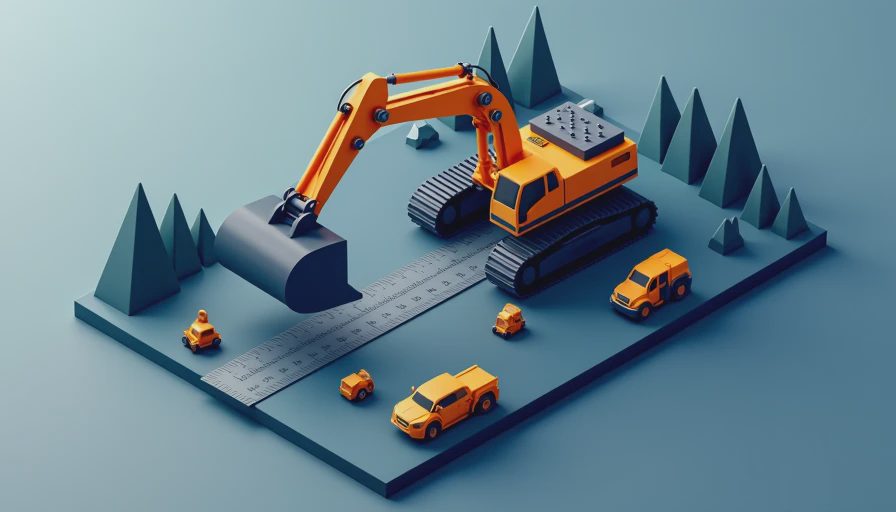
How it compares with giant hydraulic excavators
When buyers ask about the biggest excavator in the world, they often mean the largest machine they could actually purchase, transport, and operate in a conventional mining fleet. In that conversation, large hydraulic excavators deserve more attention. Models from Caterpillar, Komatsu, Hitachi, and Liebherr are built to load rigid-frame haul trucks and handle blasted material at a face.
A hydraulic mining excavator typically offers better flexibility. The operator can change digging position, work a selective section of the face, and load different truck sizes. The tradeoff is a different production model: every pass includes digging, swinging, dumping, and returning. Fuel burn, hydraulic efficiency, truck matching, tire costs, and shovel-truck synchronization determine cost per ton.
For a fleet manager, the useful comparison is not “Which machine is larger?” It is “Which system moves one ton at the lowest dependable cost?” A 1,000-ton hydraulic excavator paired with trucks may outperform a continuous excavator in geology that changes frequently. A bucket-wheel system can dominate where soft, consistent overburden and long-term mine planning justify fixed infrastructure.
What operators and buyers should inspect
Before approving any giant machine, I would build the evaluation around five checks. First, verify the material profile: compressive strength, moisture, abrasiveness, and particle size. Second, calculate the complete material path, including conveyors, transfer stations, trucks, crushers, and stockpiles. Third, price specialist labor and critical spare parts rather than assuming a general heavy-equipment shop can support the machine.
Fourth, model downtime with realistic access times. A hydraulic excavator might have a dealer or field technician within driving distance. A specialized continuous miner may require parts planning across borders and a crew trained on high-voltage electrical systems. Fifth, compare production under expected conditions, not the maximum figure printed in a specification sheet.
A used-equipment buyer should also request maintenance records, structural inspection reports, electrical test results, and evidence of component replacements. Look closely at wheel-bucket wear, conveyor alignment, weld repairs, crawler wear, and oil or grease contamination. The purchase price is only the entry ticket. A machine that loses a week of production during a critical campaign can erase a seemingly attractive discount.
The practical answer
The Bagger 293 earns the title biggest excavator in the world because its scale, mass, height, and continuous digging system exceed conventional excavators by a wide margin. It is an engineering landmark, not a universal buying recommendation. Its strengths appear in long-life open-pit operations with suitable geology, fixed infrastructure, and enough production volume to justify extraordinary capital and maintenance requirements.
For most contractors, the right choice will be much smaller: a hydraulic excavator sized to the truck fleet, haul roads, bench height, and service network. A 50-ton machine with strong parts support can make more money than a spectacular machine that sits waiting for a specialized component.
The takeaway is the same one I use in a teardown: start with the work, then choose the iron. Records and operating conditions matter more than a photograph beside a record-breaking machine. The iron does not lie, but it does require an honest question.
Hours logged: 0 on the Bagger 293; this is a specification and application analysis, not a durability test. Fluid samples pulled: 0. Parts replaced: 0. Iron identified. Iron told.

00 Transmissions
No transmissions yet. Yours opens the channel.