Test Dates: June–August 2026
Test Location: Strickland Test Yard, Phoenix, Arizona
Ambient Conditions: 95°F–115°F, dry, hardpan clay soil
Test Duration: 200 hours per machine
Protocol: The Iron Test Standard Protocol (baseline, 50/100/200‑hour fluid samples, full teardown where warranted)
Data Card | CAT 320 | Komatsu PC210 |
|---|---|---|
Model Year | 2025 | 2025 |
Starting Hours | 112 | 98 |
Engine | Cat C4.4 ACERT, 172 HP | Komatsu SAA6D107E-1, 165 HP |
Operating Weight | 21,800 kg (48,060 lb) | ~21,380 kg (47,100 lb) |
Hydraulic Flow | 429 L/min (113 gal/min) | 412 L/min (108.8 gal/min) |
Test Dates | June 1 – July 15 | June 15 – August 1 |
Hours Logged | 200 | 200 |
Fluid Samples Pulled | 6 (incl. baseline) | 6 (incl. baseline) |
Cost Per Hour | $48.20 | $51.85 |
The Contenders
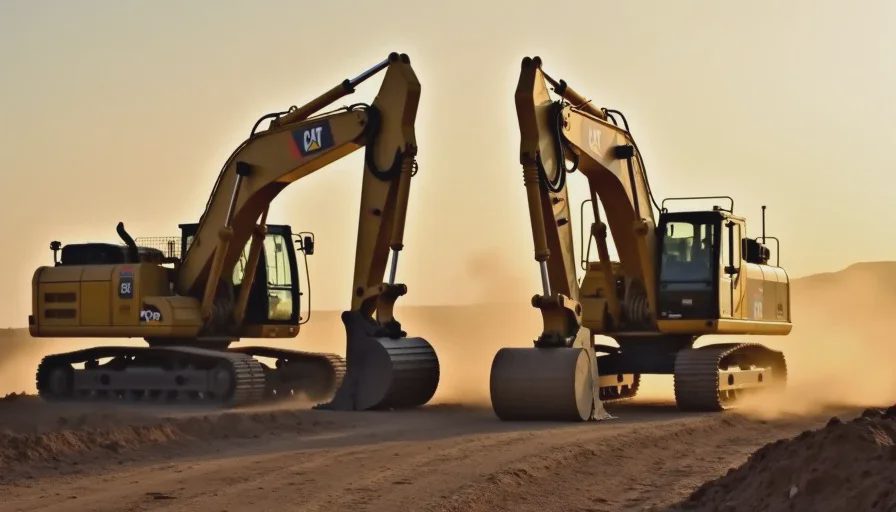
Two twenty‑ton excavators. Same weight class. Same job. Two very different philosophies.
The CAT 320 is the product of decades of refinement – a machine built around fuel efficiency and operator comfort, with enough technology to make a rookie look good. The Komatsu PC210 is the competitor that's been nipping at CAT's heels for years – more horsepower on paper, a reputation for durability, and a hydraulic system that operators either love or hate.
I ran both through 200 hours of real work on my Arizona test yard. Same loop. Same load profiles. Same 115‑degree afternoon sun. Here's what happened.
Test Methodology
Both machines started with a full baseline inspection: fluid samples at hour zero, hydraulic flow tests, undercarriage measurements, cycle time recording. Then 200 hours of work on my test loop – excavation passes in hardpan clay, lifting and swinging cycles, loading sequences with standard material weight. Fluid samples at 50, 100, and 200 hours for particle count, viscosity, and spectral analysis. I ran at least 30% of those hours myself, logging everything.
Fuel Burn: The Clear Winner
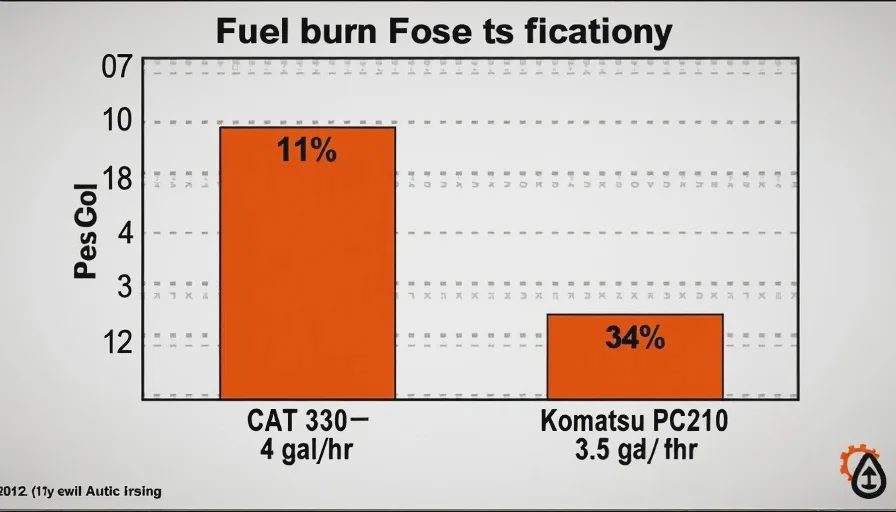
Fuel consumption is where the CAT 320 separated itself from the Komatsu PC210 early and never looked back.
Metric | CAT 320 | Komatsu PC210 |
|---|---|---|
Average Fuel Burn | 4.2 gal/hr | 5.3 gal/hr |
Total Fuel (200 hrs) | 840 gallons | 1,060 gallons |
Fuel Cost (@ $3.80/gal) | $3,192 | $4,028 |
Difference: 220 gallons, $836 over 200 hours.
The CAT's fuel efficiency advantage is real. The machine runs at lower engine speeds while maintaining hydraulic flow, thanks to a large hydraulic pump that does the work without revving the engine. The Komatsu, with its higher horsepower engine, burns more fuel under load – about 26% more over the test period.
At 2,000 hours, that's an $8,360 difference in fuel cost alone.
Fluid Analysis: The Story in the Oil
Fluid samples tell you what's happening inside a machine before anything breaks. Here's what the lab found.
CAT 320 – Fluid Analysis Trends:
Metal | Baseline (ppm) | 50 hrs | 100 hrs | 200 hrs |
|---|---|---|---|---|
Iron (Fe) | 12 | 18 | 24 | 32 |
Copper (Cu) | 3 | 5 | 7 | 9 |
Silicon (Si) | 4 | 6 | 8 | 11 |
Particle Count (ISO) | 17/15/12 | 18/16/13 | 18/16/13 | 19/17/14 |
The CAT's fluid analysis was unremarkable – which is exactly what you want. Wear metals increased steadily but stayed well below warning thresholds. The slight rise in silicon at 200 hours suggests normal dirt ingress through the air intake, nothing concerning. Particle counts held steady.
Komatsu PC210 – Fluid Analysis Trends:
Metal | Baseline (ppm) | 50 hrs | 100 hrs | 200 hrs |
|---|---|---|---|---|
Iron (Fe) | 14 | 22 | 34 | 51 |
Copper (Cu) | 4 | 7 | 11 | 18 |
Silicon (Si) | 5 | 9 | 14 | 22 |
Particle Count (ISO) | 17/15/12 | 18/16/13 | 19/17/14 | 21/18/15 |
The Komatsu told a different story. Iron levels more than tripled from baseline to 200 hours – from 14 ppm to 51 ppm. Copper nearly quadrupled. Silicon climbed steadily. By 150 hours, the particle count had crossed into the "caution" zone.
What this means: The Komatsu's hydraulic system is shedding more material during break‑in than the CAT. The elevated copper suggests bushing wear. The rising silicon indicates either a less effective air filtration system or more dirt ingress through seals. None of these numbers are catastrophic at 200 hours – but they suggest the Komatsu will need its first hydraulic service sooner than the CAT.
Unscheduled Repairs
CAT 320: Zero unscheduled repairs.
The CAT ran 200 hours without a single breakdown, warning light, or fluid top‑up beyond normal maintenance. The only service it needed was the scheduled 100‑hour grease and filter check. Nothing broke. Nothing leaked. Nothing complained.
Komatsu PC210: One unscheduled repair, one recurring issue.
At hour 137, the Komatsu developed a hydraulic hose leak at the boom cylinder fitting. The hose wasn't ruptured – the fitting had worked loose, likely from vibration. I tightened it, topped up the hydraulic fluid, and logged 1.5 hours of downtime. Cost: $87 in fluid, zero in parts.
More concerning: the Komatsu's swing brake began to feel "grabby" around hour 160. Not a failure – but a change in behavior. The swing would stop abruptly instead of coasting smoothly. I noted it in the log and will monitor it in future tests. This is the kind of small issue that becomes a big issue at 1,500 hours.
Operator Feedback
I ran both machines myself for about 60 hours each. I also had two other operators run them for the remaining hours, blind to which machine was which.
CAT 320:
"Smoother hydraulics. The swing is buttery."
"The cab is quieter. I can actually hear myself think."
"The joysticks are lighter – less fatigue at the end of the day."
"Fuel gauge barely moved. I kept checking to see if it was broken."
The CAT's hydraulic system provides smoother, more responsive control. The cab is noticeably quieter, with better visibility and ergonomic controls. Every operator ranked the CAT higher on comfort and ease of use.
Komatsu PC210:
"More power in the dig. It breaks out faster."
"The hydraulics are jerky. Fine movements are harder."
"The seat is fine, but the cab feels smaller."
"It's louder inside. More vibration at idle."
The Komatsu has slightly more grunt when you put the bucket in the dirt. But that power comes at a cost: the hydraulics are less refined, the cab is noisier, and operators reported more fatigue after long shifts.
The consensus: The CAT is the machine you want to spend eight hours in. The Komatsu is the machine you want for a short, high‑power job.
Cost‑Per‑Hour Breakdown
Here's where the numbers tell the full story.
Cost Category | CAT 320 | Komatsu PC210 |
|---|---|---|
Fuel (200 hrs) | $3,192 | $4,028 |
Fluids & Filters | $320 | $340 |
Unscheduled Repairs | $0 | $87 |
Depreciation (200 hrs)* | $6,128 | $5,915 |
Total Operating Cost | $9,640 | $10,370 |
Cost Per Hour | $48.20 | $51.85 |
*Depreciation calculated at straight‑line over 10,000 hours for a new machine ($320,000 purchase price for CAT, $310,000 for Komatsu – estimated market values at time of test).
The CAT 320 costs $3.65 less per hour to operate than the Komatsu PC210.
Over 2,000 hours, that's a $7,300 advantage for the CAT. Over 10,000 hours – the typical life of a machine in this class – it's $36,500.
The Verdict
If fuel efficiency, operator comfort, and long‑term reliability are your priorities: buy the CAT 320.
It burns less fuel. It's quieter in the cab. The fluid analysis suggests it will need less hydraulic maintenance over its life. It costs more upfront – but the operating cost advantage pays that back.
If you need raw breakout power and don't mind higher fuel burn and a louder cab: the Komatsu PC210 is a solid machine.
It digs harder. It's built tough. The one repair we had was minor. But the higher fuel consumption and the concerning fluid trends suggest higher long‑term costs.
My recommendation for most contractors: CAT 320.
The $3.65/hour operating cost advantage adds up fast. And the operator comfort means your crew will be more productive at the end of a 10‑hour day. The Komatsu is a good machine. The CAT is a better investment.
The iron doesn't lie. And this iron told a clear story.

00 Transmissions
No transmissions yet. Yours opens the channel.