A mini bulldozer earns its keep in places where a full-size crawler becomes expensive, awkward, or simply too wide for the job. I am talking residential lots, utility corridors, landscaping work, farm roads, and small excavation sites. The phrase mini bulldozer covers several very different machines, from compact track dozers with hydrostatic drive to older crawler tractors bought at auction. Treat them as interchangeable and you can buy a machine that burns hours without moving enough dirt.
The iron does not lie. A machine that pushes cleanly, holds a straight line, and starts cold without drama is telling you something. So is one with a whining final drive and a blade that drifts three inches while parked.
What a Mini Bulldozer Is Built to Do
A useful mini bulldozer typically weighs between about 3,000 and 15,000 pounds, depending on configuration. Smaller units fit through gates and between existing structures. Larger compact dozers bring more traction, hydraulic capacity, and blade authority, but they also demand a trailer, stronger access roads, and a bigger maintenance budget.
These machines are not miniature versions of a D8. Their advantage is control and access, not production volume. A compact unit can spread topsoil, cut a shallow driveway, backfill trenches, clear brush, and finish a pad with less surface damage than a larger crawler. It cannot economically move the same bank of hard clay that a 30-ton machine handles before lunch.
Look at the blade first. A six-way PAT blade is valuable for grading because it can angle, tilt, and pitch. A straight blade is simpler and often cheaper to repair, but it gives the operator fewer options on slopes and finish work. Check lift-cylinder rod condition, pin looseness, hose routing, and whether the blade settles noticeably after the engine shuts down.
The Numbers That Matter Before You Buy
For a new mini bulldozer, a realistic planning range is roughly $60,000 to more than $150,000, depending on operating weight, cab, blade, controls, and dealer support. Used prices spread even wider. A clean five-year-old compact dozer might list around $45,000 to $90,000, while an older machine with 5,000 hours can look cheap at $20,000 and still consume another $15,000 in catch-up repairs.
Do not compare purchase price alone. Build a cost card with transport, insurance, scheduled service, tracks, fuel, financing, and expected downtime. A small machine using two to four gallons of diesel per hour can be economical when it is working steadily. A failed hydrostatic pump, however, can turn that fuel advantage into a four-figure parts bill quickly. Ask the seller for service records, oil analysis, and invoices rather than accepting a statement that the machine was “just serviced.”

A contractor billing $110 per hour loses $880 before lunch if a machine sits for one eight-hour shift. That makes a $3,000 inspection by an experienced technician cheap insurance on a $70,000 purchase. The inspection should include cold start, pressure checks, fluid sampling, undercarriage measurements, and a working test under load.
Undercarriage Wear Is the Purchase Decision
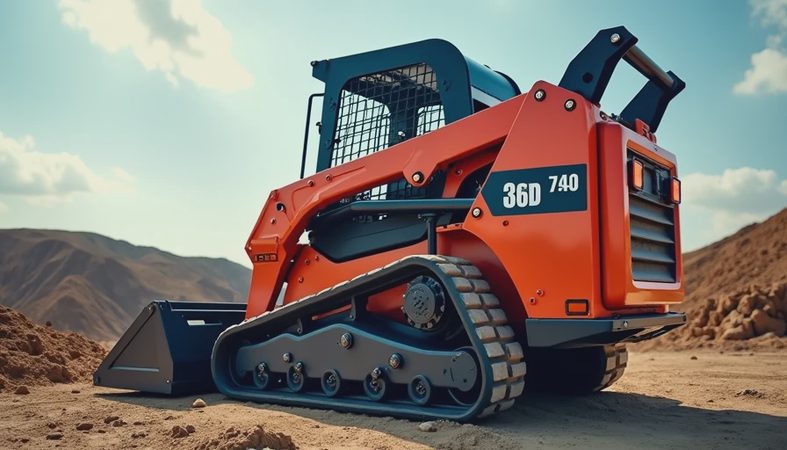
On a tracked mini bulldozer, the undercarriage is where optimistic sellers go to hide expensive problems. Measure track shoe height, link pitch, bushing wear, roller flange condition, idler alignment, and sprocket tooth shape. A shiny sprocket is not automatically healthy; sharp, hooked teeth can indicate the chain and sprocket have been wearing together for a long time.
Track replacement can run from several thousand dollars on a small unit to well over $10,000 on a larger compact crawler, especially when rollers and idlers are included. Rubber tracks are quieter and friendlier on finished surfaces, but cuts, chunking, exposed cords, and uneven tension are warnings. Steel tracks tolerate rougher ground but can damage pavement and add vibration.
Here is the diagnostic in three sentences. The symptom is uneven track wear or a machine that pulls to one side. The root cause may be misalignment, worn rollers, incorrect tension, or a bent component. The action is to measure the complete system before negotiating, not to replace one visible part and hope.
Hydraulic Control Beats Horsepower on Finish Work
Horsepower gets attention on a specification sheet. Hydraulic response determines whether the operator can actually place material accurately. Run the blade through every function at operating temperature. Watch for hesitation, chatter, cylinder drift, and a pump whine that rises sharply when more than one function is used.
A hydrostatic mini bulldozer should accelerate smoothly in both directions and maintain a consistent speed under load. Test low-range travel against a pile, then reverse on a slope without abusing the drivetrain. If the machine loses power only after the oil warms, the problem may be internal leakage rather than a simple filter restriction.
Pilot controls should feel predictable, not vague. Excessive joystick deadband makes finish grading tiring and increases rework. On a rental fleet, that matters twice: the operator produces less each hour, and the next customer inherits the damage from hurried corrections. I would choose a clean, well-supported machine with moderate horsepower over a neglected high-output unit every time.

New, Used, or Rental: Match the Iron to the Work
Buy new when uptime, warranty coverage, and predictable payments matter more than the lowest acquisition cost. Deere, Caterpillar, Komatsu, and other established manufacturers generally offer stronger dealer parts channels, but local support matters more than the decal on the hood. A dealer 40 miles away with a competent field technician is worth more than a famous brand whose nearest parts counter is three states away.
Buy used when you can verify hours, ownership, service history, and structural condition. Auction photographs are useful for narrowing choices, not for approving a purchase. Ask for a cold video, serial-number history, oil samples, and close pictures of the equalizer bar, final drives, blade mounts, and engine bay. If the seller refuses a pressure test, walk.
Rent when the workload is seasonal or uncertain. At roughly $1,500 to $3,500 per week in many markets, rental looks expensive until ownership costs are spread over only 200 annual hours. It also lets an operator test blade geometry and visibility before committing capital.
A Practical Inspection Sequence
Start with the machine cold. Check coolant level, engine oil, hydraulic oil, and final-drive oil for contamination or metallic sheen. Inspect welds around the blade frame and track frames. Look for fresh paint over cracked steel, oil washed away around seals, and wiring repairs that would not survive a wet-weather jobsite.
Next, operate every function slowly, then under load. Record travel speed, steering behavior, hydraulic temperature, and any alarms. Shut it down for ten minutes and inspect for fresh leaks. Pull a fluid sample before the seller changes anything. A laboratory report cannot identify every failure, but elevated wear metals or coolant contamination can change a purchase decision before the check clears.
Finally, price the first 500 hours. Include filters, fluids, track adjustment, cutting edges, teeth if fitted, and a reserve for unexpected repairs. A machine that costs $75,000 and needs $8,000 immediately is not a $75,000 machine. It is an $83,000 machine with less production time available.
The best mini bulldozer is not the one with the lowest sticker price or the biggest engine. It is the one that fits the access, produces the required finish, has support nearby, and can document its condition. Buy the iron you can measure. Negotiate from evidence, not paint.
Hours logged: inspection protocol varies by machine. Fluid samples pulled: pull them before purchase. Parts replaced: price them before signing. Iron tested. Iron told.
00 Transmissions
No transmissions yet. Yours opens the channel.