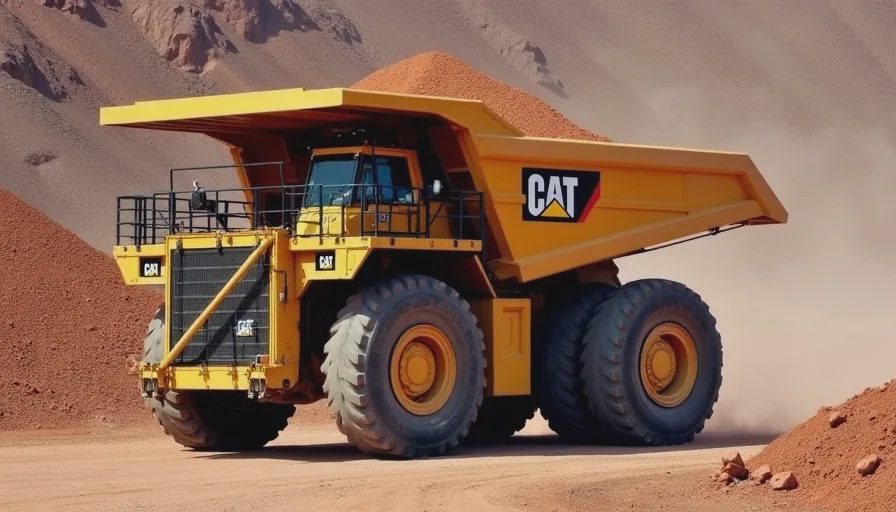
The haul truck weighs 380 tons empty. Loaded with copper ore, it pushes 600. The tires alone are twelve feet tall and cost $50,000 each. And right now, one of them is on fire.
Not a big fire. A small one—brake dust smoldering in the wheel hub. But the maintenance crew has already seen it on their tablet. The truck is thirty seconds from the service bay. By the time it stops, there's a guy with a fire extinguisher and a thermal camera standing exactly where he needs to be.
This is the Morenci Mine in southeastern Arizona. North America's largest copper producer. Over 1,000 pieces of mobile equipment. Haul trucks that run 24 hours a day, 365 days a year. And a maintenance operation that treats downtime like a four-letter word.
The Scale of the Thing
You can't understand Morenci until you see it. The pit is two miles across and 1,500 feet deep. The roads are wide enough for two 797s to pass. The shovels fill a 380-ton truck in four passes. Each pass is 80 tons of rock. Each ton contains about six pounds of copper.
The equipment fleet is staggering:
20+ haul trucks (CAT 797s, Komatsu 930Es)
4 electric shovels
12 dozers (CAT D10s and D11s)
8 wheel loaders
3 in-pit crushers
Hundreds of support vehicles
The maintenance team works in four overlapping shifts. They have a central shop—a building the size of a Walmart—and satellite shops scattered around the pit. Every piece of equipment has a maintenance plan measured in hours, not days. Every major component has a replacement schedule that's tracked like a countdown clock.
The Guy Who Runs the Bay
His name is Mike. He's been at Morenci for 22 years. Started as a lube truck operator. Now he manages the 3:00 PM to 11:00 PM shift. He shows me around the central shop at shift change—the only hour of the day when the bay is quiet.
"Here's the rule," he says. "If a truck comes in for a scheduled service, it doesn't leave until the service is done. No exceptions."
I ask him what happens if a part is delayed.
"We have a warehouse with $8 million in parts. If it's not in there, we make it or we cannibalize it."
"How often do you cannibalize?"
"Less than we used to. The data tells us what to stock. We're pretty good at it now."
What the Data Says
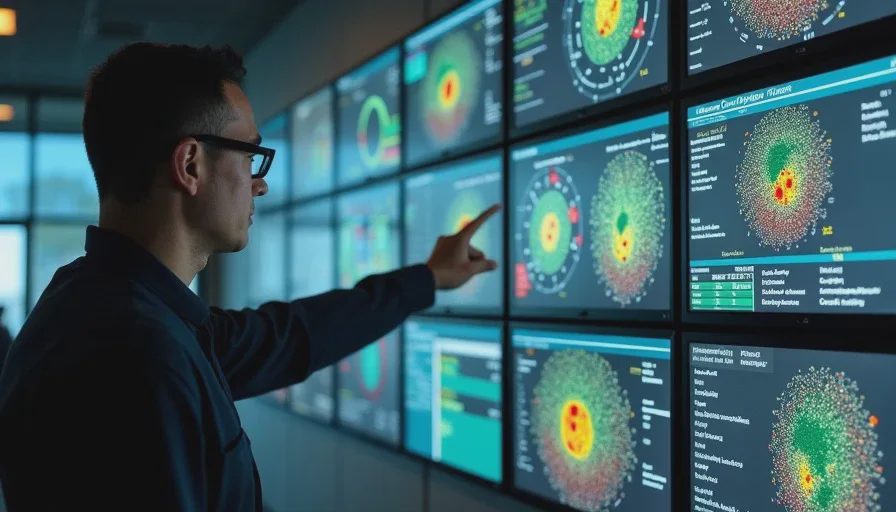
Mike shows me their maintenance dashboard. It's a wall of screens showing real-time equipment status. Every truck is a dot on a map. Green means operating. Yellow means scheduled maintenance. Red means unscheduled downtime.
"Right now we're at 92% availability," he says. "The target is 95. We've been as high as 96, but that took everyone breathing down everyone's neck and it wasn't sustainable."
I ask him about component life. How long does a 797 transmission last?
"About 12,000 hours. We swap them at 10,000 to be safe. The engines go 16,000 between overhaul."
That's 24/7 operation. Two years on a transmission. Three years on an engine. In the real world, those numbers are shorter—hard rock, steep grades, Arizona heat. But the data lets them adjust.
"We pull oil samples every 250 hours on every machine," Mike says. "Every single one. The oil tells us when something's changing before it breaks. We had a final drive last week that flagged on copper and iron at the same time. We pulled it that night. The bearings were pitting. Saved the whole gear set."
The Worst Job in the Mine
Mike takes me to the tire shop. It's a separate building with a giant cage where they inflate the 797 tires. Each tire takes 110 PSI. A failure at that pressure releases enough energy to level a house. The cage is there for a reason.
"The tire guys are crazy," Mike says. "They don't call it a tire shop. They call it 'The Thunderdome.'"
The real worst job, he tells me, is the lube truck operator who works the night shift in the pit. Six hours of driving through dust and darkness, servicing machines while they're still running. It's lonely, dangerous, and thankless. But it's also the first line of defense against component failure.
"The lube guys see the machines more than anyone," Mike says. "They spot leaks. They hear the strange noises. If a lube guy says a truck sounds bad, we stop it and check it. No arguments."
What Mining Teaches About Machine Longevity
Industrial-scale mining is a different world from construction. The machines never stop. The environment is more abrasive. The loads are heavier. But the maintenance philosophy is better.
Here's what I learned at Morenci that applies to every equipment operation:
Oil analysis isn't optional. At the mine, every machine gets sampled every 250 hours without exception. In construction, I see owner-operators who sample once a year or never. That's a false economy. A $50 fluid sample tells you more than a $2,000 inspection.
Maintenance counts, not hours. Mike's team doesn't wait for a scheduled service window if the data says something is wrong. They pull the machine early and fix it. They don't run to failure. They fix by condition.
Cannibalization is a tool. When you need a part today and the supplier says two weeks, you pull it from a machine that's already down for something else. It's not ideal. But it keeps the fleet moving.
People matter more than parts. Mike didn't show me the parts room first. He showed me the break room. It has couches and a TV and a coffee machine that's always full. He wants his crew rested and comfortable. A tired mechanic makes mistakes. A comfortable mechanic catches problems.

00 Transmissions
No transmissions yet. Yours opens the channel.