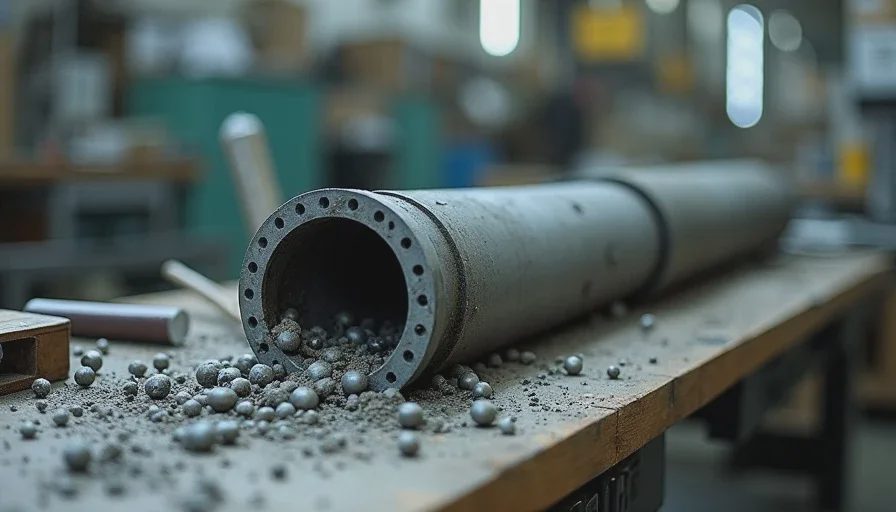
The machine came off the line at 7:00 AM on a Tuesday. The operator reported slow hydraulics and a high-pitched whine from the pump. By 9:00 AM, the pump had seized. By noon, the entire hydraulic system was contaminated with metal. And by the time I got the call, the damage was done. Three weeks of downtime. $28,000 in parts and labor. All because of a $28 filter that had been on the shelf six months too long.
I diagnosed that failure at a copper mine south of Tucson. The machine was a 45-ton excavator. The culprit: the return filter had failed structurally. The media had collapsed, opening a direct bypass path. Contaminated oil flowed straight from the return line into the reservoir. Then back through the main pump.
The filter didn't just fail. It started a cascade.
Part 1: The Single Point of Failure
Hydraulic filters are not optional. They are the only barrier between the dirt your machine works in and the precision-clearance components that make it work. A typical hydraulic system has three filter locations:
Filter Location | Function | Failure Consequence |
|---|---|---|
Suction strainer | Catches large debris before the pump | Clogs → cavitation → pump erosion |
Pressure filter | Protects valves and actuators after the pump | Bypass → contaminated oil reaches precision surfaces |
Return filter | Captures wear debris before the tank | Collapses → particles recirculate indefinitely |
The return filter is the most critical. It's the last defense before oil returns to the reservoir. If it fails, every particle it captured gets released back into the system. And from there, they go straight through the pump again.
Part 2: The Cascade in Action
Here's what happened at the copper mine, step by step:
Step 1: The Filter Media Collapses
The filter had been on a shelf in the warehouse for 18 months before installation. Humidity had degraded the resin that binds the cellulose media. When the machine went to work, the filter's structural integrity was already compromised.
At full flow—about 250 gallons per minute—the pressure differential across the filter spiked. The media collapsed inward, tearing away from the end caps.
Step 2: The Bypass Valve Opens
Most hydraulic filters have a bypass valve set at around 25–50 PSI pressure differential. When the media collapses, flow restriction increases sharply. The bypass valve opens, allowing unfiltered oil to pass directly from the return line into the reservoir.
The operator didn't know. The machine had a filter restriction gauge—but it was on the dash, and the operator had been told to "ignore the red light unless the machine stops."
Step 3: Unfiltered Oil Recirculates
The moment the bypass opened, every particle in the return line went straight into the tank. The tank held 60 gallons of oil. That oil had already been through the system. It contained:
Sludge from break-in wear
Silica dust from the mine's air filtration system
Copper particles from bushing wear in the swing drive
Iron fines from the final drives
All of it went straight back through the main pump.
Step 4: The Pump Becomes a Grinding Machine
The main pump in this excavator is an axial piston pump, with clearances between the pistons and the cylinder block measured in microns. When you pump contaminated oil through those clearances, the particles act as lapping compound. Every rotation grinds metal off the pistons and the swashplate.
I pulled the pump apart after the seizure. The cylinder block had grooves you could feel with a fingernail. The pistons were scored. The swashplate had a wear pattern that looked like someone had taken sandpaper to it.
Step 5: The New Particles Make It Worse
As the pump wore, it generated more metal particles. Those particles entered the return line. The return filter was still collapsed. The bypass valve was still open. So the new metal went straight back into the tank and then right through the pump again.
Every hour of operation after the filter failure accelerated the wear exponentially. By hour four, the pump was shedding enough material to fill a teaspoon. By hour eight, the oil had turned silver.
Step 6: The Contamination Spreads
Once the pump started shedding metal, those particles didn't just stay in the pump. They traveled through the system:
The main control valve: Spool lands scored. Seals damaged. Leakage increased.
The swing motor: Bearings pitted. Internal leakage led to slow, erratic swing.
The cylinders: Piston seals scored. Oil bypassed. Bucket curl lost power.
The cooler: Particles lodged in the cooler core, reducing cooling efficiency. Oil temperature climbed 15°F.
The cascade was complete. A $28 filter failure had taken out a $28,000 pump, $8,000 in valves, $2,000 in seals, and three weeks of production.
What the Inspection Found
When I inspected the machine on day two, here's what I saw:
The pump: Seized. The swashplate was scored beyond repair. The pistons were welded to the cylinder block by galling.
The filter: The media had collapsed into a ball at the bottom of the housing. The bypass valve was stuck open.
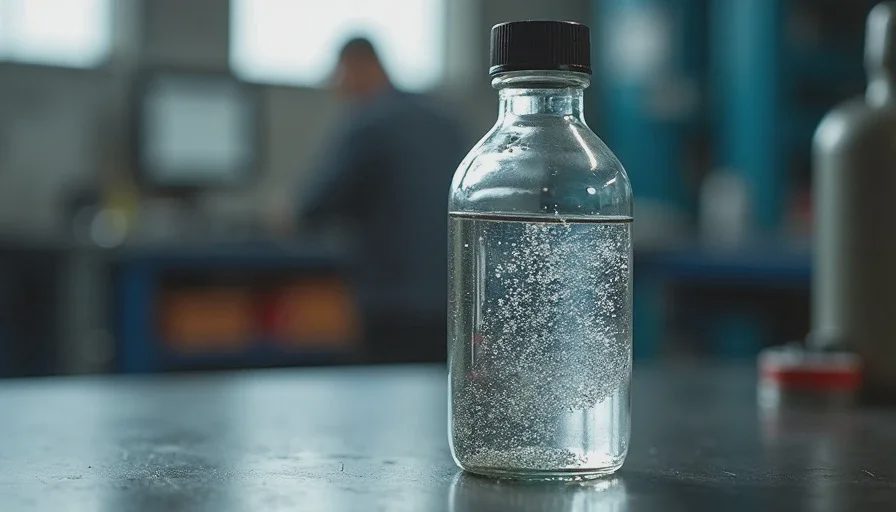
The oil: Silver. I held a sample up to the light and could see particles floating in suspension.
The valve bank: Spools were scored. The system couldn't hold pilot pressure.
The tank: A layer of sludge on the bottom, mixed with copper and iron fines.
The repair estimate: $28,000.
The cause: one filter, improperly stored, improperly maintained, and improperly monitored.
How to Prevent a Cascade
A contamination cascade is preventable at five points. Here's how to stop it before it starts:
1. Store filters properly. Never leave hydraulic filters in a humid environment. The moisture degrades the media. If a filter has been on the shelf for more than a year, don't use it. This rule alone would have saved the copper mine $28,000.
2. Change filters by condition, not time. Time-based filter changes are the enemy. A machine working in heavy dust or extreme temperatures needs filter changes far more often than the manual says. I recommend condition-based changes: sample the oil every 250 hours and change the filter when the pressure differential rises above 15 PSI, not when the hour meter hits a number.
3. Monitor filter restriction. Every machine has a filter restriction gauge. Train your operators to read it and act on it. The machine at the copper mine had a gauge that was reading in the red for two hours before the pump seized. The operator ignored it because "it's always red."
4. Always sample when you change filters. Cut open the old filter and inspect the pleats. Shine a light through the folded media. If you see metallic glints, you caught the contamination early. If you see heavy debris, you caught it late—but at least you know.
5. Replace the filter before you run a machine hot. The pressure differential across a filter increases with oil viscosity. Cold starts and hot oil both stress the media. If you change a filter immediately after a hot run, you may be installing a new filter that immediately sees high pressure differential. Let the system cool first.
The Takeaway
The contamination cascade is one of the most common failure modes in hydraulic systems. It starts small. It accelerates fast. And it ends with a repair bill that dwarfs the cost of prevention.
The iron doesn't lie. But the filter tells the truth—if you check it before it falls apart.
00 Transmissions
No transmissions yet. Yours opens the channel.