
Most operators find out their hydraulic pump is failing the same way: the oil comes back silver.
Not gray. Not dark. Silver. That shimmer in the sample bottle means the pump has already been eating itself for weeks, and every one of those microscopic metal particles has been circulating through the rest of the system—valves, cylinders, coolers, filters. By the time the oil turns silver, the repair bill isn't just a pump replacement. It's a full system flush, maybe a valve bank rebuild, and a week of downtime you can't afford.
Here's the thing: hydraulic pumps rarely fail without warning. They just fail without being heard.
I spent seven years at Caterpillar teaching dealer techs and customer crews how to hear a pump failing before the gauge confirmed it. The signs are there—audible, thermal, and performance indicators that anyone standing next to a running machine can learn to read. This is the field guide.
Audible Indicators: What the Pump Is Saying
Your ears are the first and best diagnostic tool you have. A healthy pump has a consistent, smooth whine—the sound of pressurized fluid doing its job. Anything else is a message.
High-pitched squeal or whine
This is cavitation. The pump is trying to pull more oil than it's receiving. The suction line is restricted, the filter is clogged, or the oil is too cold and thick to flow freely. Air bubbles form and collapse inside the pump, creating shock waves that erode metal surfaces. If you hear this, stop the machine and check the suction strainer and inlet hose immediately. Run it another hour like this and you'll be pulling pump pieces out of the return filter.
Intermittent rattle or knock
This is the sound of loose parts. A worn swashplate, a damaged piston shoe, or a bearing that's starting to fail. The rattle is the piston slapping against the slipper or the bearing cage going off-center. It tends to be most audible under load or at specific RPMs. If you hear a knock that changes frequency with engine speed, start planning for a pump pull. You're not in emergency territory yet—but you're close.
Chatter or vibration at the control valve
This usually means the compensator or pressure regulator is hunting. The pump is trying to find a pressure setpoint that the system can't hold—because the pump itself is worn and can't maintain flow, or because a valve is sticking. Either way, the pump is cycling on and off rapidly, which creates heat and accelerates wear. This one is easy to ignore because the machine still works. But it's a sign that something internal is out of spec.
Silence where there should be sound
A pump that suddenly goes quiet—loses its normal operating whine—is often a pump that just lost pressure entirely. If the noise drops and the machine slows at the same time, you've had a catastrophic failure. Shut it down immediately and start the autopsy.
Thermal Indicators: What the Heat Is Telling You

Hydraulic systems generate heat. That's normal. But there's a difference between operating temperature and warning temperature.
The pump body is significantly hotter than the rest of the system
Put your hand near the pump housing (don't touch—we're measuring, not burning). If the pump is 20°F hotter than the reservoir or the valve bank, you've got internal leakage. The pump is working harder than it should, and the energy is converting to heat instead of flow. This is almost always caused by worn piston-to-barrel clearances or a damaged valve plate.
The inlet hose is warm
The suction line should be cool or ambient. If it's warm, you've got heat migrating backward from the pump, which means heat is building up inside the pump housing faster than the oil can carry it away. That's a sign that the rotating group is generating excessive friction.
Oil temperature spikes under light load
If the hydraulic oil gets hot when the machine isn't working hard, you're deadheading pressure somewhere—or the pump is bypassing so much oil internally that it's basically a heater. Check the relief valve setting, but if that's normal, start looking at pump wear.
Performance Indicators: What the Machine Is Doing
The machine tells you when something's wrong. It just doesn't send an email.
Cycle times are slower than they were last week
If the boom takes longer to raise, the bucket curls slower, or the swing is lagging, the pump isn't moving enough oil. Check the engine RPM first—if that's normal, the pump is losing volumetric efficiency. The clearances inside have opened up, and oil is slipping past the pistons instead of being pushed out.
The machine feels "lazy" under load
Not slow—lazy. The controls still respond, but there's a sponginess or hesitation when you ask for full flow. That's a pump that can't maintain pressure under demand. It'll show rated pressure at no load, but as soon as you put the bucket in the dirt, the pressure drops and the engine labors. Classic sign of worn pistons or a failing swashplate.
Intermittent loss of function
One circuit works fine; another is weak. Or the machine operates normally cold but loses performance as it warms up. As internal clearances grow, oil viscosity drops, and the pump can't compensate. Heat makes it worse. This pattern—temperature-dependent performance loss—is almost always a pump wear issue.
Foam in the reservoir or milky oil
Air entering the system through a failing shaft seal or a loose suction fitting creates foam. That foam reduces the pump's ability to generate pressure and accelerates wear. If you see foam or the oil looks milky (air entrainment, not water), find the suction leak before you find metal in the filter.
What to Do About It
If you catch these signs early, you have options. If you wait until the oil turns silver, the decision is made for you.
First 24 hours: Listen, feel, time
Take the machine through its full range of motion and time each function. Compare to what you know it should do. Listen at idle and under load. Feel the hoses and the pump housing (carefully). Write down what you observe. This takes 15 minutes and tells you more than any diagnostic computer.
Next 48 hours: Sample and filter
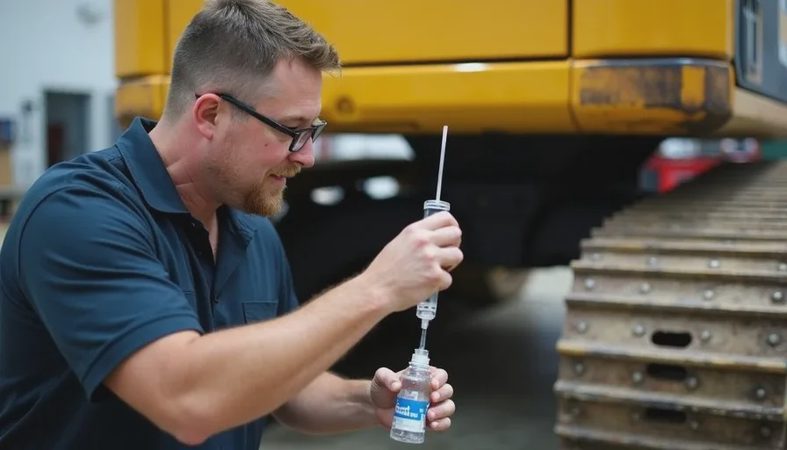
Pull a fluid sample and send it to the lab. While you wait, cut open the return filter and inspect the pleats for metal flakes. Shine a flashlight into the folded paper—if you see glints, your pump is shedding material. How much tells you how urgent the problem is.
If you catch it before metal appears: Plan a pump rebuild
This is the sweet spot. The pump is telling you it's tired, but it hasn't started eating itself yet. Schedule a rebuild before it fails catastrophically. Cost: $3,000–$6,000 for a mid-size excavator pump. Downtime: a few days.
If you catch it after metal appears: Plan a system overhaul
This is the silver-oil scenario. The pump has contaminated the entire system. Plan on pump replacement plus full system flush, valve inspection, cylinder seal check, and filter replacement. Cost: $15,000–$25,000. Downtime: a week or more.
The Takeaway
Hydraulic pumps don't fail without warning. They groan first. They get hot first. They get lazy first. The only question is whether you're listening.
The machine is telling you something right now. You just have to decide whether to hear it before the oil turns silver.


00 Transmissions
No transmissions yet. Yours opens the channel.